Give incoming paper a temporary place
Post needs somewhere to land, but that place should not be the final archive. A small tray or folder can hold items awaiting attention. Keep it close to where you normally deal with them so it does not become an untouched pile in the entrance hall.
Sort by the action needed: respond, pay, file or check. The names can be simple and should reflect your own process. Avoid a large set of folders that requires more thought than the task itself. A document should not need a new classification system every time you open the post.
Household manuals deserve a separate decision from active correspondence. Some may be available digitally from the manufacturer, while others contain model details, installation records or information you need to retain. Keep the documentation that belongs with a specific item together so it can be found when the item is serviced or passed on. Avoid retaining packaging, duplicate leaflets and unrelated paperwork merely because they arrived in the same envelope. Check what is needed rather than applying a blanket rule to discard or keep everything.
Size the archive for the documents
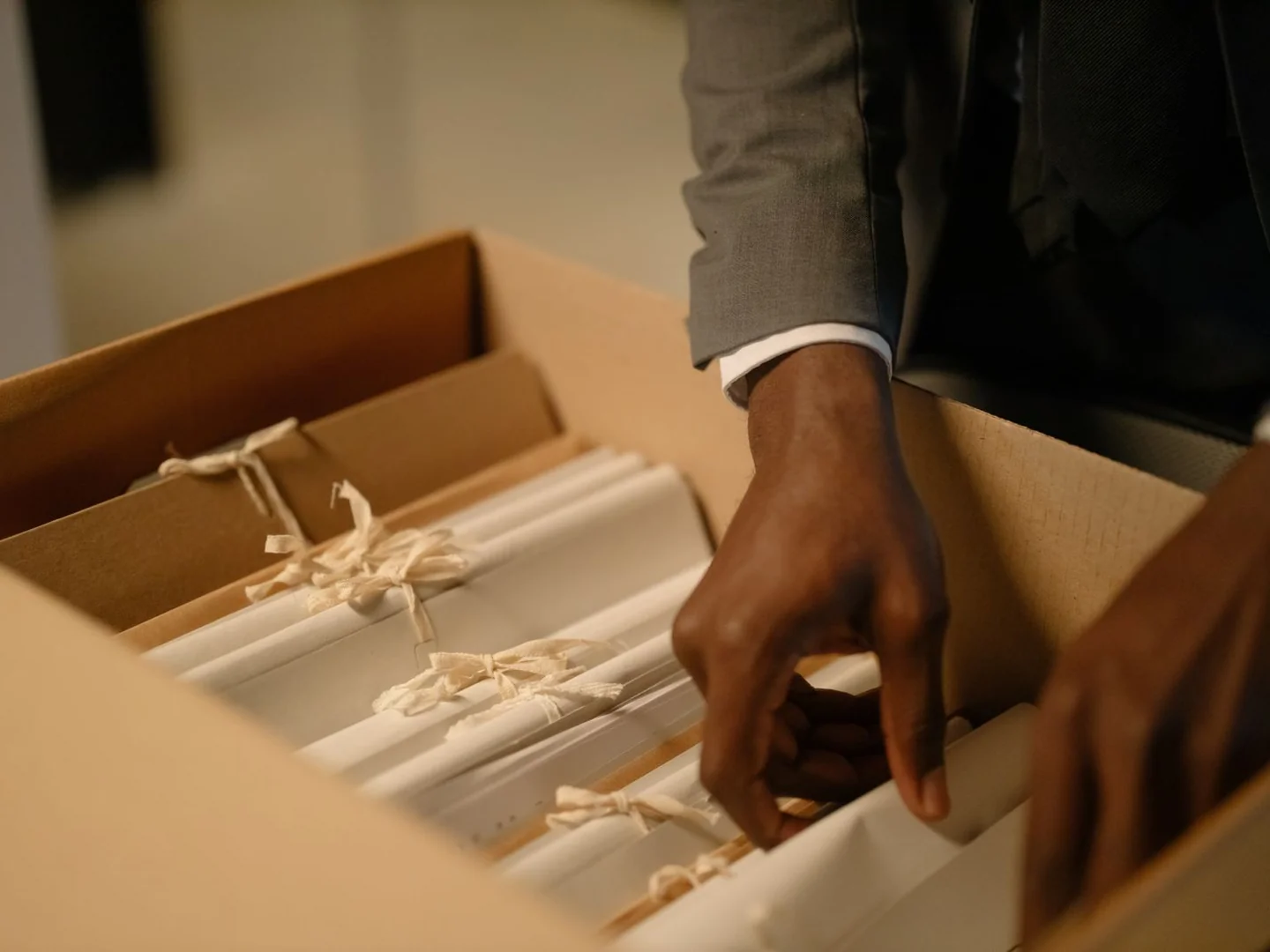
Check whether a box or drawer accepts the paper and folders without bending. A4 sheets need more room once they are inside a file or protective sleeve. Handles and drawer mechanisms can reduce usable width, so compare internal dimensions rather than buying by the outside size.
Choose categories that will help you retrieve something later, such as a household service or a particular item of equipment. Keep original documents secure where they need to be retained. This is an organisation method, not advice about which legal or financial records you must keep; retention requirements depend on the document and circumstances.
Digital copies may be useful, but do not assume a scan replaces every original. If you digitise papers, establish where the files are stored and how they are backed up. Otherwise the paper pile may simply become an equally difficult digital folder.
Put the box where it can be used
A small file box on an accessible shelf may work better than a deep cabinet in another room. Heavy folders should be within comfortable reach, and confidential papers should not be left openly visible to visitors if that matters to the household. Match security to the contents.
Allow room for a folder to be removed without pulling out its neighbours. Overpacked files make returning a single page awkward and encourage another temporary stack. When the box fills, review the contents according to the appropriate retention needs before automatically buying a larger one.
Keep a clear surface nearby for sorting. It need not be dedicated permanently to paperwork, but the task is easier when documents can be spread briefly and put away afterwards. A compact archive works when the incoming tray continues to move, rather than gradually becoming the real storage system.