Sort by use and appearance
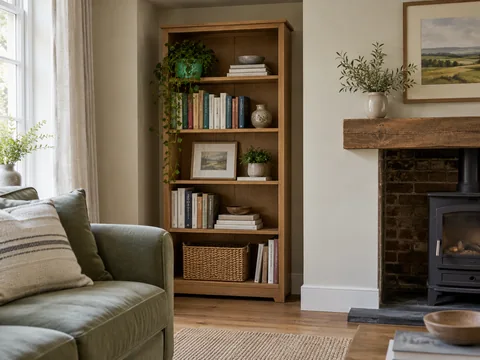
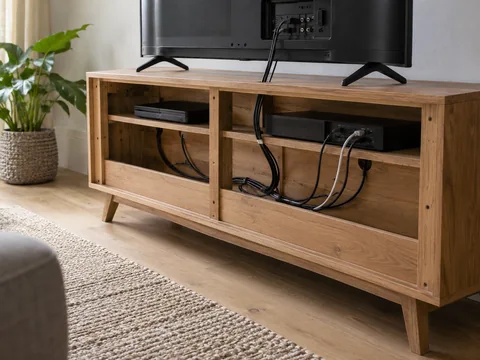
Books, frequently used dishes and a small collection of objects can work well on open shelves. Cables, paperwork, games and mixed household supplies may be easier to live with behind doors. This is not a distinction between good and bad belongings. Different objects simply make different visual patterns when stored together.
Look at the room from its usual seats. A shelf arrangement beside a desk may be outside the main view, while the same collection opposite a sofa becomes a prominent feature. Choose open storage with that sightline in mind instead of judging only a close-up photograph of the unit.
In a dining room, a few everyday bowls might suit an open shelf because they are used and washed frequently. A collection of occasional serving pieces may be better in a cupboard where it can remain protected between uses. In a living room, visible books can make browsing easier, while games often benefit from a compartment that accepts their inconsistent box sizes. These choices come from the contents and frequency of use, so there is no fixed percentage of open shelving that every room should contain.
Think about returning an item
An open shelf removes the step of opening a door, which can make daily use easier. It also requires a clear, accessible place for each object. A display that must be rearranged every time a book is taken down is not functioning as straightforward storage.
Closed cupboards can accept more visual variety, but their interiors still need to work. A deep undivided compartment may become a stack of inaccessible objects. Use shelves or containers that suit the contents, and check that the door opens far enough for any drawers or pull-out boxes inside.
Dust and cleaning are another difference. Open objects need to be moved to clean the shelf. Doors reduce that exposure but do not eliminate care, particularly in a busy room. Choose an amount of display you are willing to maintain rather than filling every opening because it exists.
Combine the two without a rigid formula
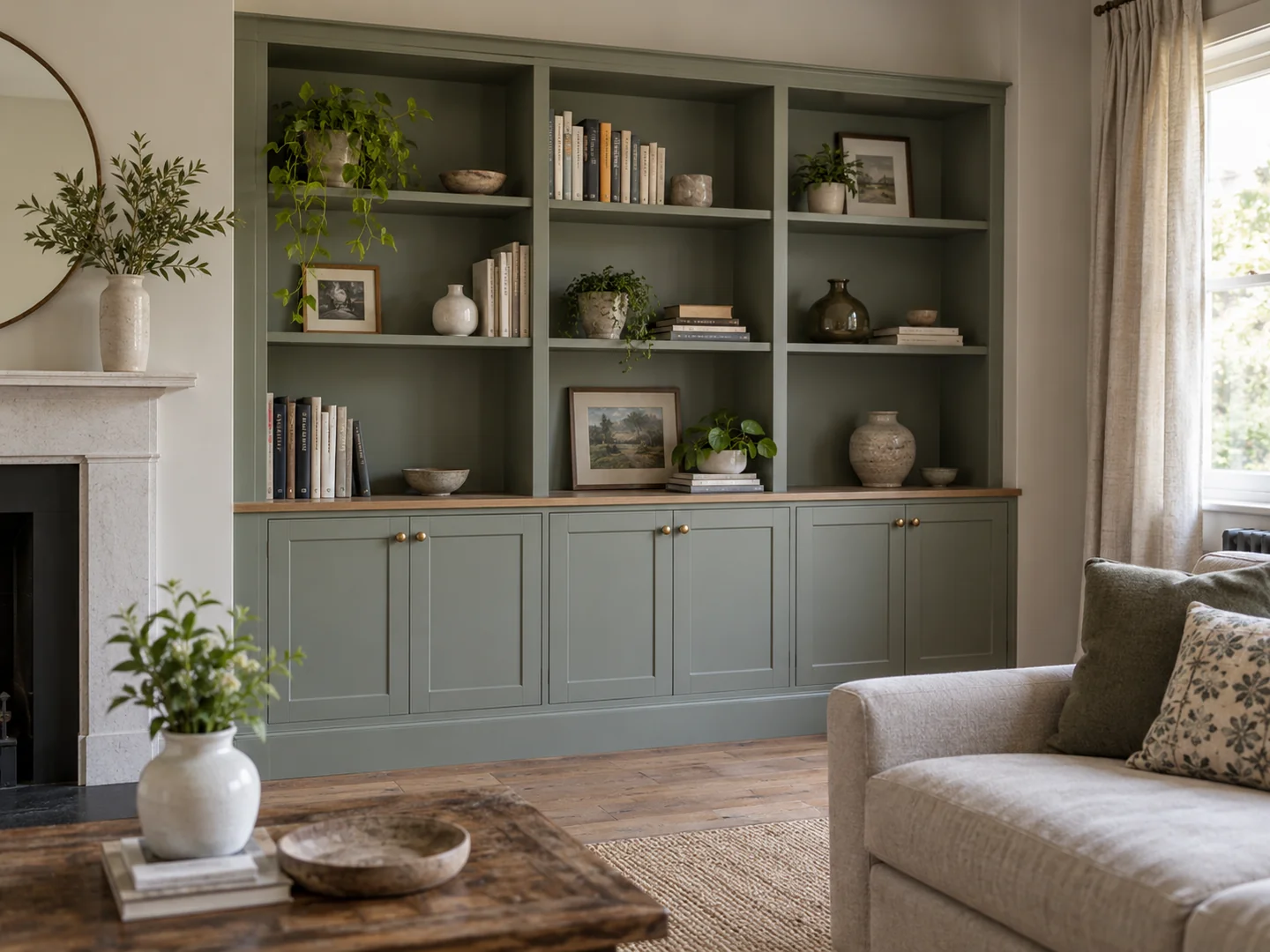
A unit with closed lower storage and open shelves above can work when the lower section holds larger mixed items and the upper part carries books. It is not automatically the right arrangement for every room. Frequently used heavy objects may be awkward in a low cupboard if retrieving them requires repeated bending.
You can also place a closed cabinet beside a separate bookcase, allowing their proportions to respond to different contents. Matching finishes are optional. A shared height or a related material may be enough to connect them without making the room feel like a fitted display system.
Leave some open shelf space unfilled if the collection does not require it. Storage does not need to be decorated to capacity. When deciding how many doors to choose, imagine the unit after an ordinary week rather than just after a tidy. That view is a better guide to how much visual variety you want the room to carry.