Begin with the way the platform opens
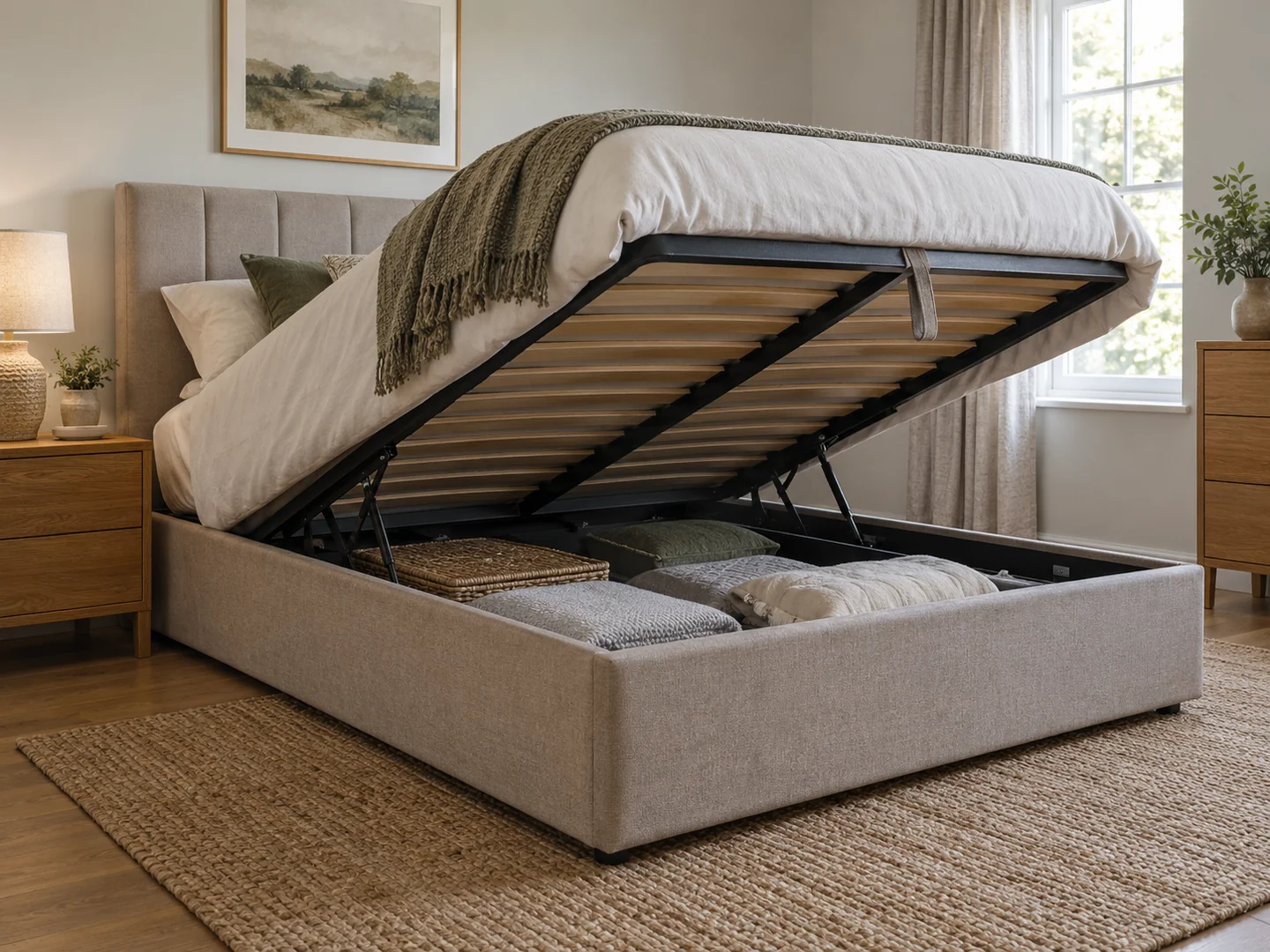
An end-opening bed lifts from the foot, while a side-opening model raises along one side. The useful choice depends on where a person can stand and how the raised platform moves through the room. Obtain the product drawing and operating instructions rather than deciding from a closed-bed photograph.
Measure the full bed frame and the open configuration. A low ceiling, sloping roof or nearby fitting may interfere with the raised mattress platform. A bedside lamp or wall shelf can also sit in its path. The storage volume underneath is only useful if the mechanism can reach its required fully open position.
Leave a clear approach at the operating side. There must be enough room to use the handle or strap as instructed and to move away while the bed is open. A blanket chest at the foot may suit an ordinary bed but obstruct an end-opening ottoman. Include the person and the furniture together in the plan.
Read the mattress requirements
Lift mechanisms are designed for particular conditions, which can include a permitted mattress and bedding weight range. Check the exact bed's instructions before pairing it with an existing mattress. Do not assume that any mattress of the right width and length is compatible with the mechanism.
Dreams' ottoman safety information, for example, instructs users to have the mattress in place before operating the lift, open the platform fully before accessing storage and keep hands clear of the mechanism. Follow the instructions for your own bed, including any safety lock or support procedure. Product-specific directions take precedence over general storage advice.
If the platform behaves unexpectedly, stops staying in the prescribed position or has damaged components, stop using the storage and contact the manufacturer or a suitable professional. Do not prop it open with household objects or alter the mechanism to make a mismatched mattress work.
Decide what really belongs underneath
Spare duvets, seasonal bedding and other bulky lightweight items are often easier to justify there than objects used repeatedly throughout the day. Consider when the bed is occupied. You cannot conveniently retrieve something from the storage while another person is sleeping on top, even if the mechanism is easy to operate.
Measure the internal cavity, including divisions, supports and the clearance below the lowered platform. A tall suitcase may fit in the visible opening but interfere when the bed closes. Keep the contents within the space permitted by the manufacturer and away from hinges or moving parts.
Use smaller bags or containers when they make belongings easier to identify and handle. Avoid packing so tightly that you must search under the mechanism or pull at a trapped object. The bed's storage should remain an orderly space that can be accessed according to the operating instructions.
Group the contents so they can be recognised from the operating position. A label facing the foot is useful in an end-opening model but may be invisible in a side-opening one. Avoid creating layers that require repeated lifting over other belongings. A pair of smaller textile bags might leave a little space unused yet make retrieval substantially simpler than one full-width bag that is difficult to manoeuvre.
Before returning a container, confirm that nothing has shifted into the mechanism's path. Keep the cavity within its stated capacity and never force the platform down against an obstruction. If an object only fits when pressed into position, it belongs in different storage.
Compare the alternatives in the same room
A bed with drawers asks for floor clearance beside it. An ottoman asks for an opening path above it and a suitable operating position. Under-bed boxes need a route out beneath the frame. Each option uses a different kind of space, so compare them in the actual bedroom rather than ranking them by quoted capacity alone.
Think about the user's comfort with the operation. Try a demonstration in a shop if possible and ask about the model's assembly and maintenance. A large hidden compartment is not a benefit if opening it is difficult or unsuitable for the person who needs the contents.
The bed still has to be comfortable and appropriate as a bed. Storage capacity should not distract from mattress support, frame size and the ordinary routes around it. A smaller amount of accessible storage elsewhere may serve the household better than maximising the cavity below an inconvenient sleeping arrangement.
Plan assembly and later access
Ask how the frame is delivered and assembled, and follow the manufacturer's requirements for the number of people and the working space needed. Keep the instructions after installation. Moving the bed later may require a particular dismantling procedure rather than dragging a large assembled mechanism across the floor.
Leave nearby controls, sockets and maintenance access usable. The substantial frame can make the wall behind it harder to reach than with a simple open bedstead. Decide where charging cables and lamps belong before the bed is filled and pushed into its final position.
Once installed, organise the contents so an occasional retrieval is straightforward. Keep children away from the open mechanism and never treat the cavity as a place to play or sit. The design succeeds when the storage can be used exactly as intended, with the room providing the space and routine the mechanism requires.