Consider what might change
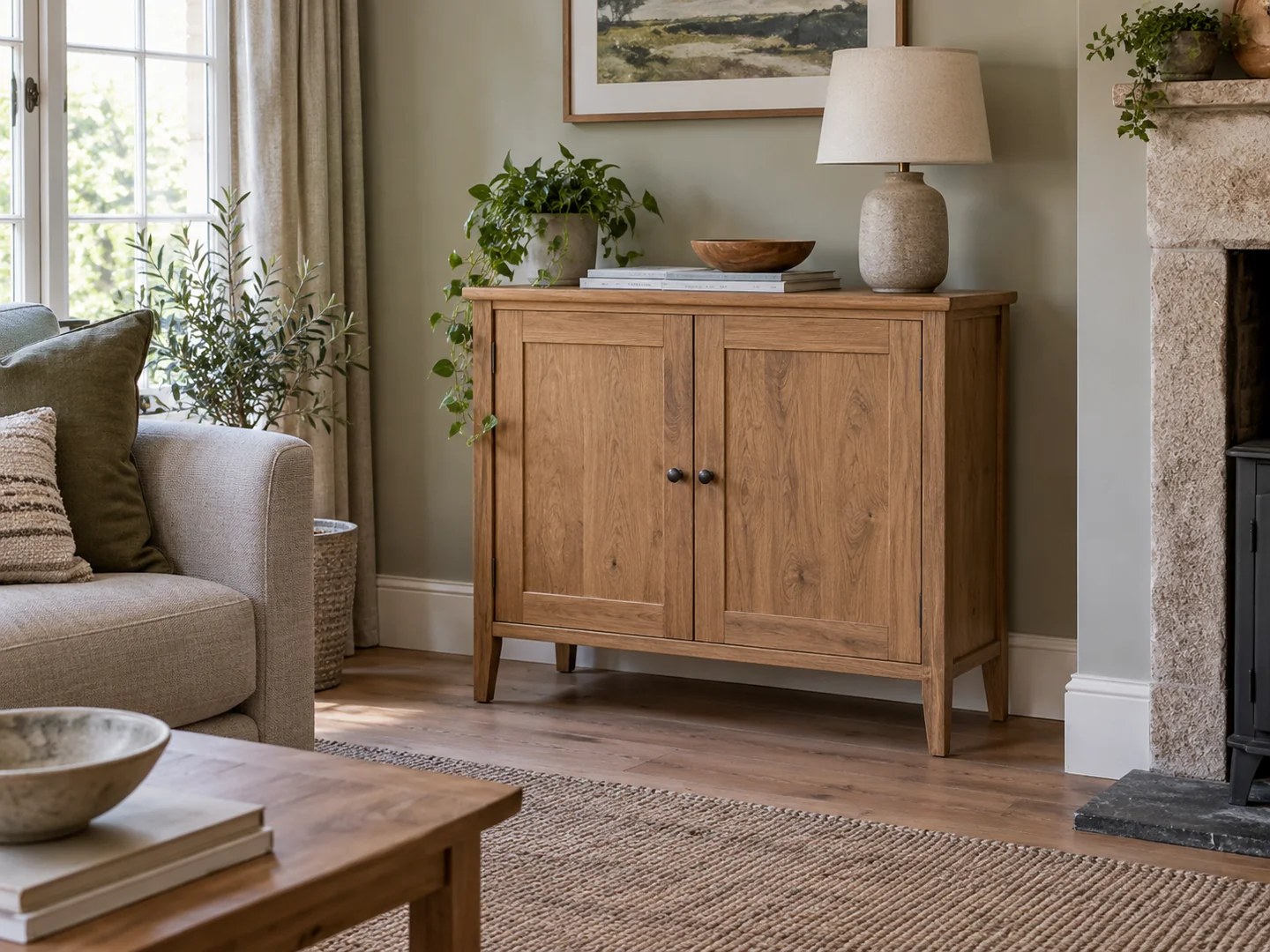
A freestanding cupboard can move within the home or to a future home, provided its dimensions and installation requirements suit the new position. That flexibility is useful when the room may change from office to bedroom or when the collection inside it is still evolving.
It is not automatically easy to move. Large solid pieces can be heavy, and some flat-packed furniture has specific dismantling and reassembly guidance. Check how the item is built and delivered if future moves are a significant part of the decision.
Existing furniture can provide a low-cost test of a new storage position. Move a suitable piece into the room temporarily, installing it safely as required, and use it for the intended category. Its proportions may not be ideal, but the exercise can reveal whether the location is convenient before fitted work is commissioned. If the cupboard is repeatedly ignored in favour of a pile nearer the activity, the problem may be location rather than capacity. That is useful to discover while the plan is still easy to change.
Let the furniture remain visibly furniture
A freestanding piece often looks intentional with a margin around it. Trying to fill an alcove almost exactly can expose uneven walls and leave awkward tiny gaps. A clear space at the side or above allows its shape to stand independently rather than imitating fitted joinery imperfectly.
Compare its depth with the surrounding room. Legs may make a cabinet look lighter, but the full footprint still affects the route. Handles, open doors and the position of the person using it belong in the measurement. Visual lightness does not create physical clearance.
Choose internal storage for the contents. A beautiful cupboard with one large cavity may be less useful than a plainer unit with suitable shelves. If extra fittings are available, confirm that they belong to the exact model and meet its load and installation requirements.
Keep installation requirements explicit
Freestanding describes the furniture form; it does not mean wall anchoring is unnecessary. Follow the product instructions and make sure the chosen position allows the required fixing. Check skirting, wall construction and services before delivery rather than leaving that decision until the piece is full.
Fitted work may be appropriate where irregular walls, a ceiling slope or an unusual collection calls for a tailored interior. It requires accurate surveying and decisions about permanent use. Freestanding furniture may leave some volume unused but offer a simpler way to test how much storage the room actually needs.
You can combine the approaches. A fitted wardrobe might handle clothes while a movable chest holds work materials elsewhere. There is no requirement for every piece to share one installation method. Judge each by its task, the access it provides and how likely that task is to change over the life of the room.