Find where the light enters
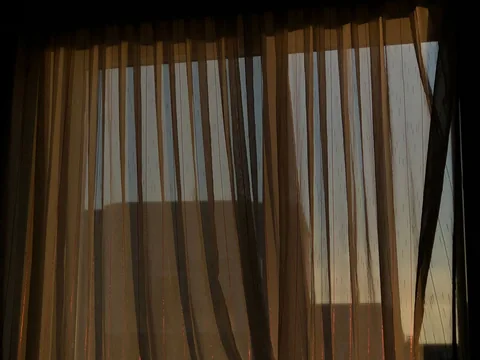
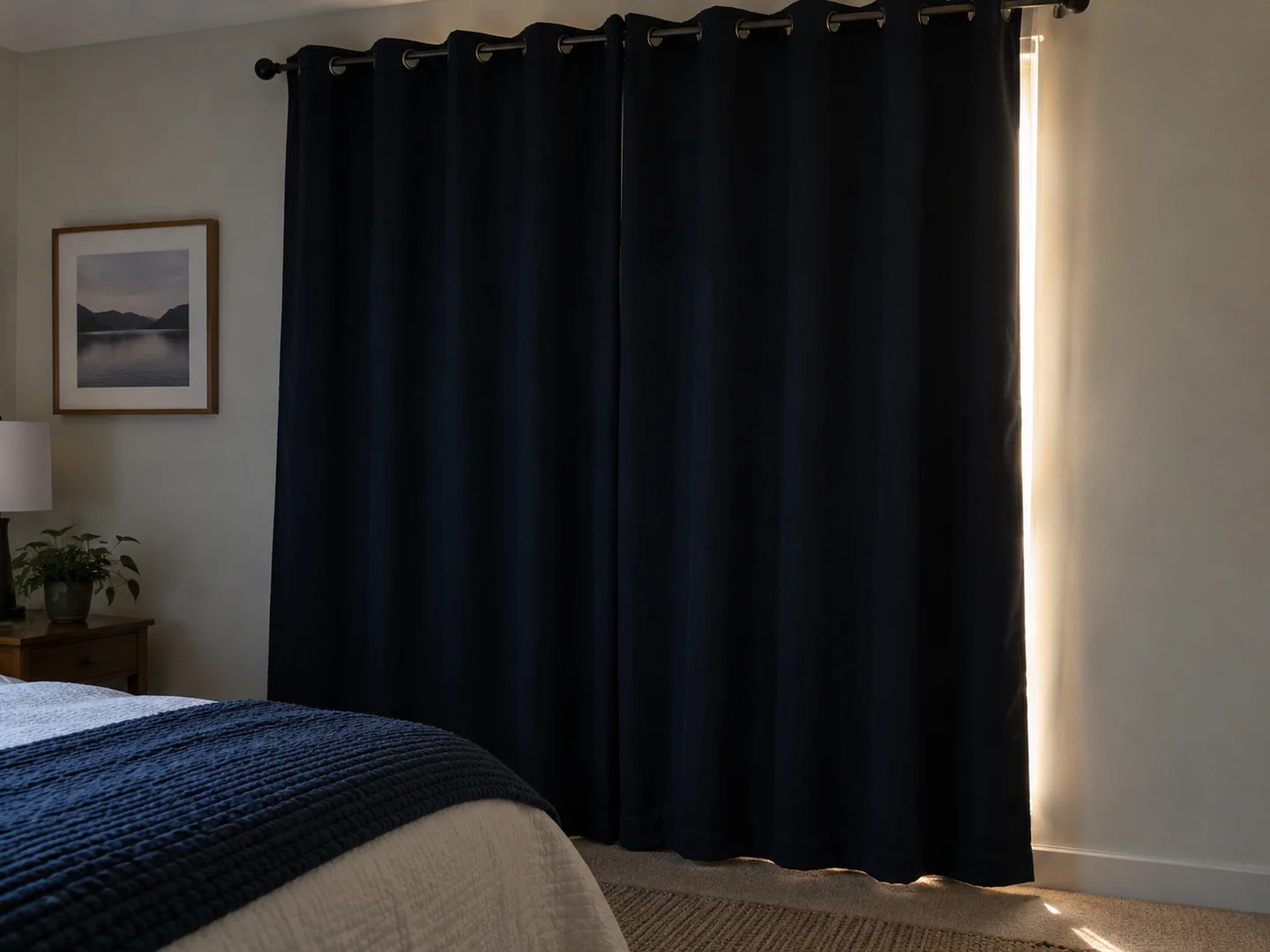
A curtain can have an opaque lining and still leave a bright strip beside the wall or above the pole. Look at the window in daylight with the curtains fully closed. Identify whether the light is passing through the cloth, between the panels, around the sides or beneath the hem.
These are different routes. Buying a darker fabric will not necessarily fix a large side gap. Pulling a curtain tightly across the centre may reduce the middle opening while making the outer edge worse. Start with the geometry of the covering rather than its colour.
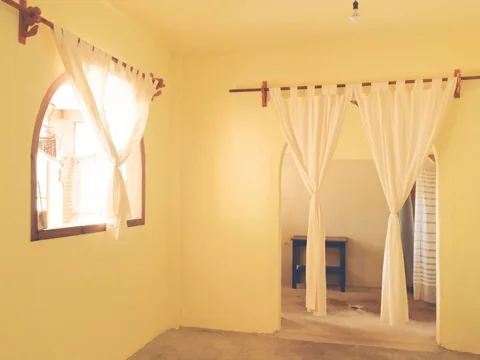
Check that the curtains are wide enough for their intended heading and that they close in the way the system was designed to work. A pair stretched flat across a wide pole may need a different width, not a stronger tug.
Look beyond the glass
A pole or track that extends beyond the window can allow the fabric to overlap the surrounding wall, where the layout permits it. The exact position depends on the window, heading and hardware. Follow the supplier's measuring and fitting guidance rather than adding arbitrary extensions.
Some systems offer returns towards the wall or an overlap at the centre. Ask whether those features are compatible with the chosen curtains. Improvised clips, tapes and adhesive attachments may damage finishes or interfere with operation, so avoid turning a measured system into a collection of temporary fixes.
The lower edge needs its own decision. A floor-length curtain is not suitable in every room, especially where it would cover a heater or trail across a route. Do not solve light leakage by ignoring those constraints.
Set a realistic target
A bedroom that needs strong light control may benefit from a purpose-designed combination of coverings, but additional layers must still operate safely and remain clear of hazards. If blinds or tracks use cords or chains, follow their safety instructions and fit the supplied devices correctly.
Ask the supplier what light exclusion the complete installation can achieve. A fabric described as blackout does not automatically make the entire room dark. Product claims about material should not be mistaken for a promise about every edge of every window.
After any change, test the window at the time when light is troublesome. Morning sun and an evening streetlight can reveal different gaps. Judge the result from the bed, where it matters, rather than only from directly in front of the curtains.