Begin with what the curtain needs to do
A sitting-room curtain that closes for a few evening hours has different priorities from a bedroom curtain facing an early sunrise. Before comparing lining names, write down the main task: reduce light, add body to a light face fabric, improve the closed appearance or contribute to comfort around the window.
Several linings may claim more than one benefit. That does not mean they produce the same finished curtain. Ask for the specification of the particular material and, where possible, see it combined with the chosen face fabric rather than judging two loose samples separately.
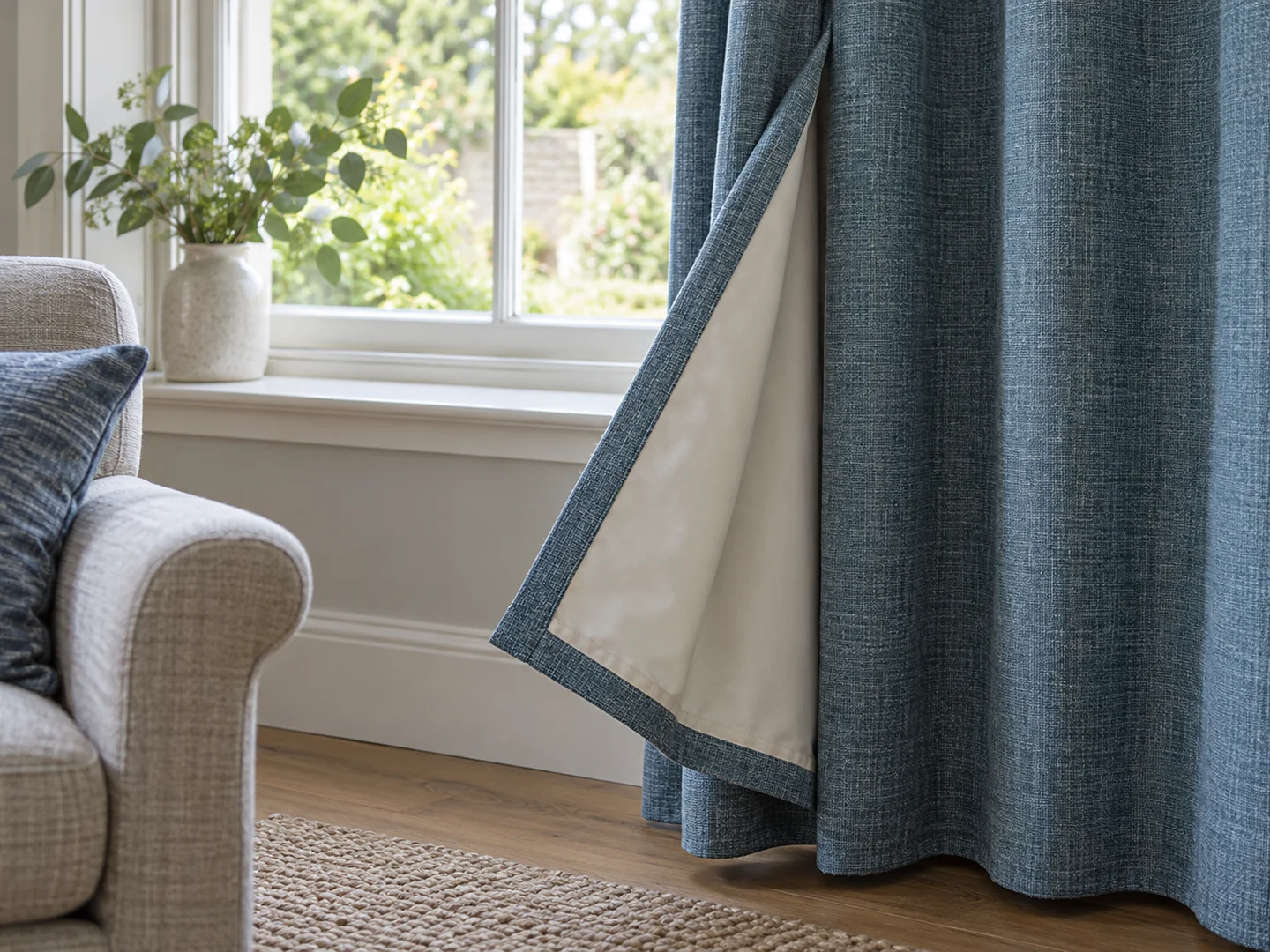
The lining is usually seen from outside and sometimes at the curtain's leading edge. Check its colour as well as the front fabric. A visible bright-white lining can have a different appearance from an ivory one, particularly beside a coloured curtain or dark window frame.
Compare the closed fabric with the open stack
A lining adds material and may alter the way a curtain hangs. A lightweight face fabric can gain a more substantial drape, but the finished pair also has more to gather at the sides. In a window with limited stacking space, that extra bulk deserves attention before ordering.
Ask to see the proposed combination folded or hung. Pinching two small swatches together gives only a rough impression. A display curtain or a sample made with the actual layers is more informative, especially for a costly made-to-measure order.
The pole or track must suit the weight of the complete curtains. Do not assess it using the face fabric alone. If replacing an unlined pair with a much heavier lined one, check the hardware and its fixings with the supplier or installer rather than assuming that the old arrangement has spare capacity.
Separate light control from total darkness
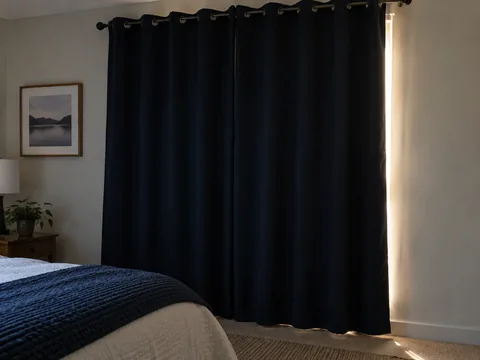
A blackout lining is intended to restrict light through the material, but light can still travel around the sides, top and bottom of the installed curtain. Look at the whole window arrangement. A suitable lining and an unsuitable width can still produce a disappointing bedroom result.
If the room needs strong light control, discuss the complete installation with the supplier. The heading, track position, centre overlap and side coverage all play a part. Do not buy a thicker lining expecting it to repair large gaps created by the hardware position.
For a room where some filtered light is welcome, a standard lining may provide the appearance you want without the same degree of opacity. Test the combined fabric against a window, while remembering that a small held-up sample cannot represent every feature of a full curtain.
Treat warmth claims with care
A curtain can be part of a window's overall comfort arrangement, but the result depends on fit, the window and how the room is heated. Avoid choosing from a dramatic saving claim without knowing its conditions. The lining's stated properties are only one part of the installed result.
Keep radiators and other heaters clear according to their instructions. A heavy lined curtain that covers a radiator may obstruct heat entering the room. More material is not automatically a better arrangement. Where the heater is below the window, the drop and layout may need to change before the lining choice matters.
If the window has damp or condensation problems, investigate those separately. A new textile layer is not a repair for a leaking frame or a substitute for appropriate ventilation. Check the wall and window condition before hanging expensive fabric against them.
Read the care instructions for the whole curtain
Face fabric and lining may have different properties, but the finished curtain must be cared for as a complete product. Follow its supplied care instructions. Do not assume a washable face cloth makes a lined, weighted and headed curtain suitable for a domestic wash.
Ask whether a separate lining can be removed and how that affects cleaning. Also check who is responsible for measurements if a lining is added to existing curtains. An incompatible drop or attachment method can leave the new layer visible below the hem or interfere with the heading.
Record the lining choice with the fabric code, heading and measurements. If two rooms use the same face fabric but need different light control, their linings may legitimately differ. The useful choice is the one that suits each room's routine and can be supported, opened and maintained without a daily struggle.