Open every nearby door
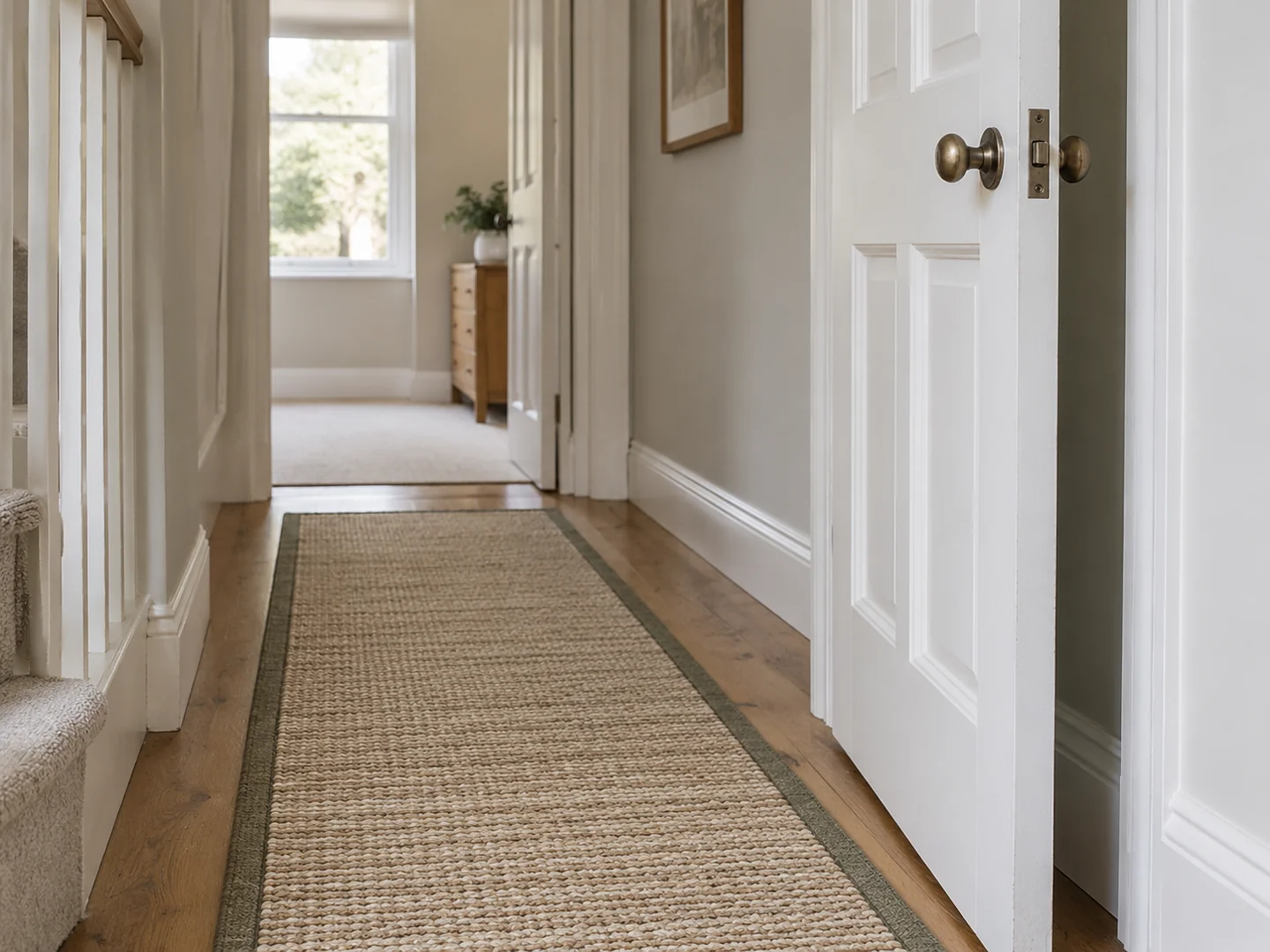
A hallway runner can fit the floor plan and still catch a cupboard door. Check the full swing of every door beside it, including doors that are rarely opened. Measure the narrowest clearance and compare it with the complete rug-and-underlay thickness.
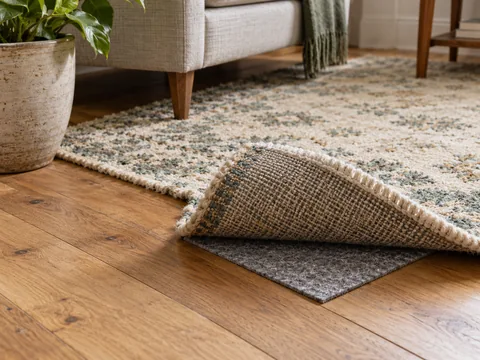
Do not judge the pile alone. A bound edge, fringe or underlay can add height at the exact point where the door crosses. If the clearance is marginal, ask for product details or choose a lower-profile option rather than expecting the door to flatten the rug over time.
Keep the front door's movement and any existing entrance mat in the assessment. Two overlapping loose layers can create an awkward ridge.
Choose where the runner stops
A runner does not have to fill the hall from end to end. Leave its ends where they make sense in relation to thresholds and turns. An edge placed exactly where people pivot towards the stairs may be more troublesome than one in a quieter stretch.
Look at the width with coats and furniture in use. A console table leg or shoe basket can reduce the visible space and push the walking line closer to the rug edge. Test the normal arrangement rather than an empty hall.
Use an underlay recommended for the runner and compatible with the floor. If the rug continues to slide, curl or ruck, address the cause instead of treating it as a harmless decorative inconvenience.
Make maintenance part of the choice
Hallways collect grit and moisture from footwear. Read the runner's cleaning guidance and decide how it will be lifted, vacuumed and dried if needed. A very long rug may be harder to handle in a small flat than its photograph suggests.
Keep fringing out of door paths and inspect the edges after the rug has settled. Follow the maker's flattening instructions; do not improvise with heat or adhesives that may damage the rug or floor.
When the runner stays flat, clears the doors and leaves the route comfortable, consider its pattern and colour. Those visual choices work best after the hallway's moving parts have been accounted for.