Choose the view that matters most
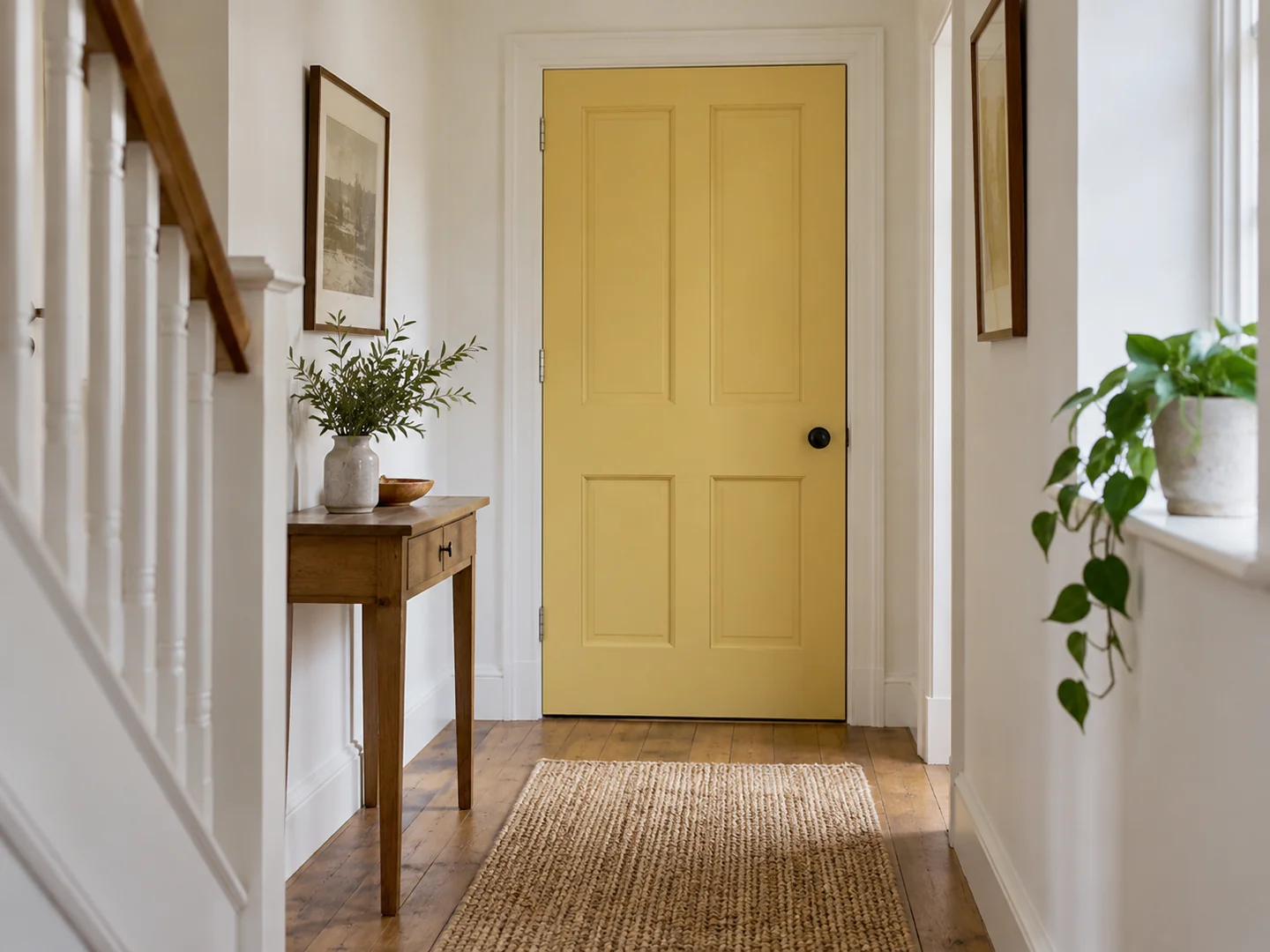
A muted yellow door in a white hall can provide a single clear area of colour. Before painting, open it fully and look from both rooms. The door leaf, frame and edges form different shapes in each position, and the colour may become part of a room you had not intended to change.
Decide whether to colour one face, both faces or the frame as well. A coloured leaf within a white frame looks contained. Taking colour across the frame makes the opening more substantial. Neither is automatically more complete; they are different outlines.
Photograph the door open and closed, then mark the proposed areas on a copy or sketch. This is particularly useful if a decorator will carry out the work, because a casual instruction to paint the door leaves several details unresolved.
Include the handle and neighbouring surfaces
Brass, chrome and black handles all sit differently against a new colour. Bring the paint sample close to the hardware and floor. If other doors are visible nearby, decide whether this one has a reason to stand apart or whether the change should be quieter.
A colour taken loosely from a nearby rug or artwork can create a connection, but exact matching is unnecessary. The door occupies a much larger area than a detail in a print, so a slightly softer version may be easier to live with.
Avoid choosing only from the brightest part of the hall. The door may spend most of its time in shadow or under artificial light.
Keep the job suitable for the door
Check the material and existing finish before choosing paint. A factory-coated door, bare timber and previously painted joinery may need different preparation. Follow the coating manufacturer's instructions rather than applying leftover wall paint simply because the colour is available.
Do not alter fire-door hardware, seals or required labels as part of a decorative experiment. Seek appropriate advice if the door has a fire-safety function or its status is uncertain.
Once painted, let the door be the main change for a while. You may find that the hallway needs fewer new accessories because the colour is already present at a useful scale.