Count the interruptions
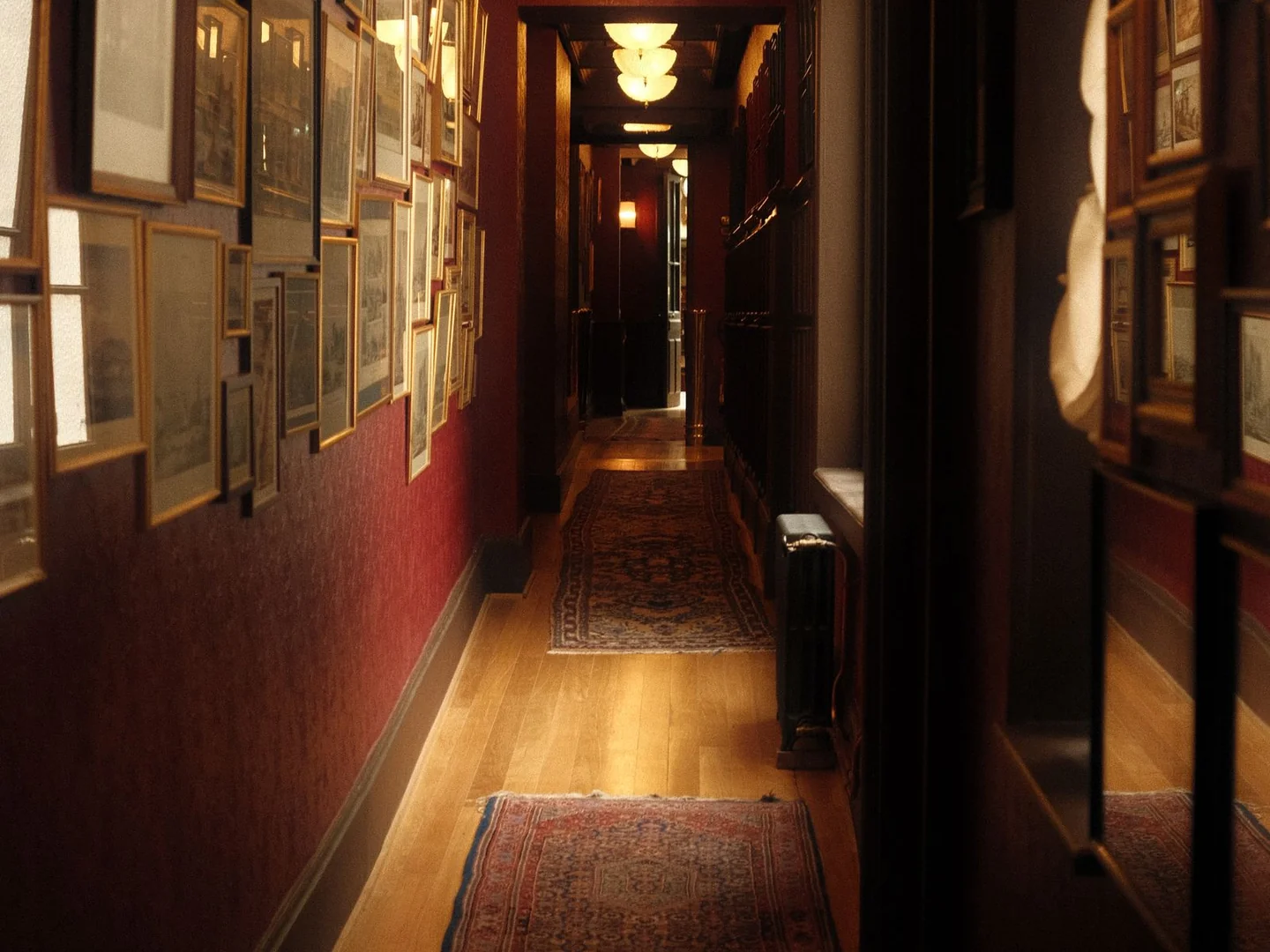
A narrow hallway may have surprisingly little uninterrupted wall. Doors, a radiator, stairs and coat hooks break it into pieces. A colour scheme that looks straightforward on a sample board can become a row of small blocks once those features are included.
Stand at the front door and then at the other end. Notice which surfaces form a continuous line and which are glimpses. If the doors stay white, a strong wall colour will emphasise their rhythm. Painting doors and walls in related shades can make the interruptions quieter, though the correct paint product still needs to be chosen for each surface.
Also look at the floor. A patterned tile or dark runner already gives the hall a strong direction. It may need a relatively simple wall treatment rather than another stripe, border or contrasting dado.
A lower colour needs a reason to stop
Painting the lower part of a wall can introduce colour without filling the entire hallway. An existing dado rail supplies a clear boundary. Without one, choose a height in relation to the doors, switches and stair shape, not merely because it looks attractive in somebody else's room.
Try the proposed division with a removable paper strip or suitable low-tack tape tested on the surface. Walk through the hall with a coat and bag. A line that cuts awkwardly through a radiator or follows every rise of the staircase may create more visual activity than a single wall colour.
For a simple arrangement, a muted green lower wall and a lighter upper wall can sit alongside timber flooring. But pale-over-dark is an option, not a requirement. You may prefer a complete mid-toned wall with the ceiling left lighter. Compare the actual shapes before choosing between them.
Judge it as a route
Hallways are often viewed while moving, so test colour from several positions rather than at one beautifully framed angle. Include the adjoining room visible through an open door. A hall that is quiet on its own can become a useful link between more strongly coloured rooms.
Check the sample under the installed hall light. A room with borrowed daylight may depend heavily on that fitting for most of the day. If the walls look dull, changing the colour slightly may help the appearance, but it will not make an inadequate light illuminate the stairs.
Finally, choose a finish intended for the surface and expected use. Bags and shoes regularly brush a narrow hall. Look at the actual product's cleaning guidance rather than assuming that a finish name alone guarantees durability.