One colour on each board
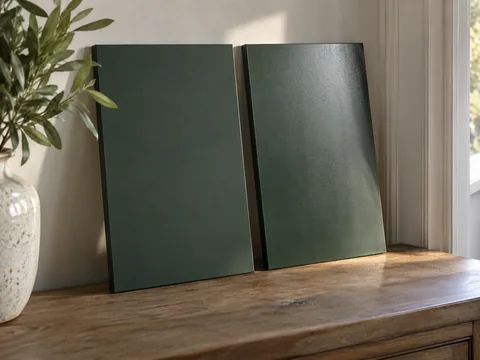
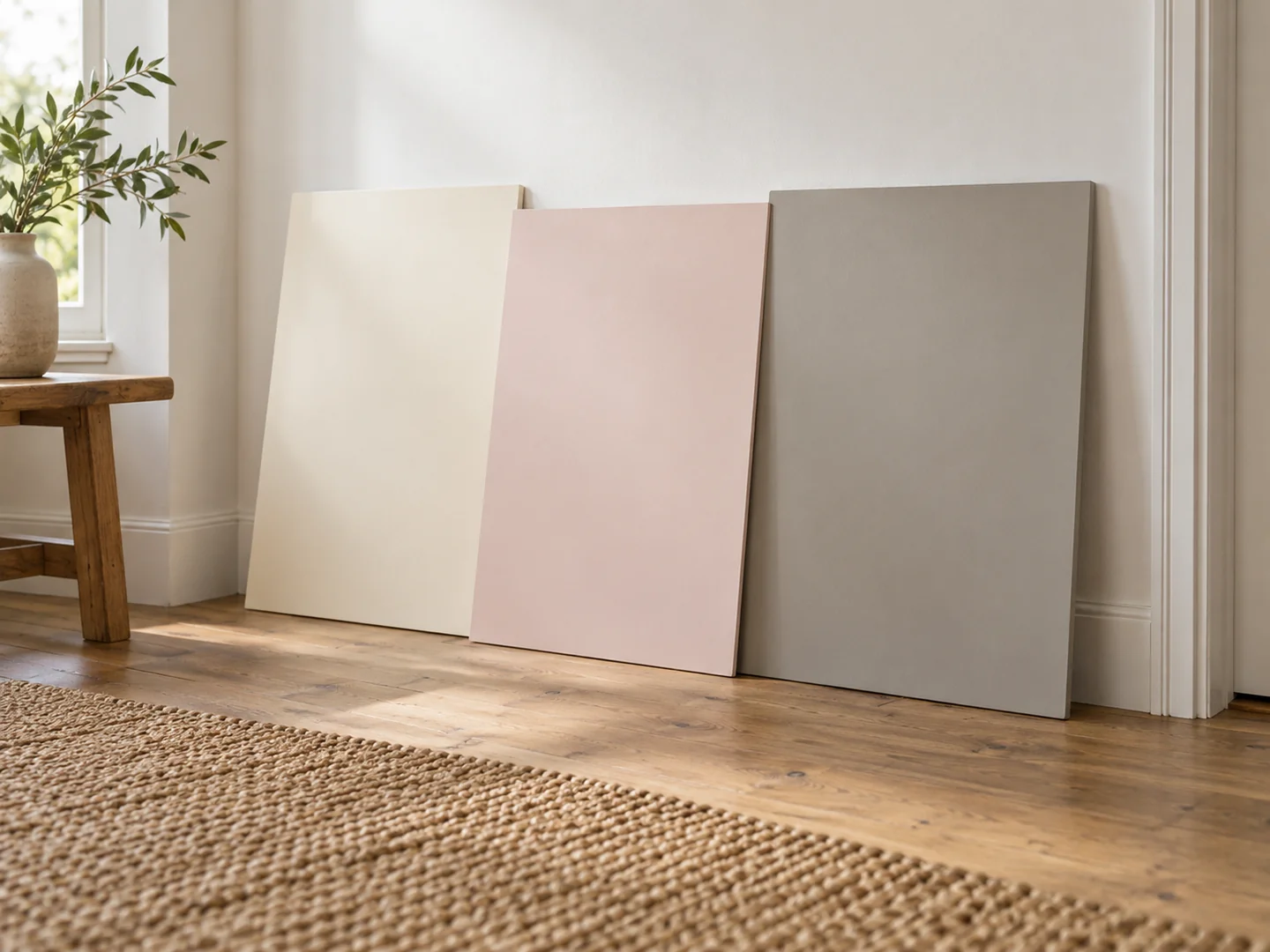
A cluster of paint testers can become a colour scheme of its own. The green square makes the neighbouring beige look pink, while the old wall colour surrounds them both. Separate sample boards reduce that distraction and let you take each candidate to the parts of the room that matter.
Use a surface suitable for the paint and follow the sample pot instructions, including the number of coats and drying time. A flimsy piece of card that curls is frustrating to position; a firm board or suitable lining paper gives you a more useful area to look at. Label the reverse with the exact colour, brand and finish. Names alone are easy to confuse after several samples have accumulated.
Keep the painted area generous enough to see from the doorway. Tiny cards are useful for narrowing a range in a shop, but they are a poor substitute for a larger area beside a sofa or cupboard. Leave a clean margin only if you find it helpful; remember that a white border can also change how a pale colour seems to read.
Move the sample to the object that is staying
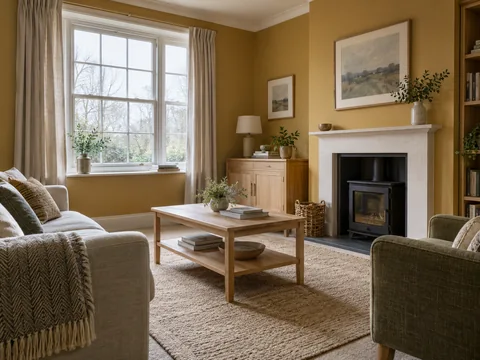
Hold the board beside the carpet, not just at eye level. Put it next to the darkest piece of furniture and the brightest white surface. If curtains will remain, place the sample close enough that you can see both at once. An attractive wall colour can still be the wrong neighbour for an expensive fabric you have no intention of replacing.
Look at candidates one at a time before comparing them together. This helps you notice your response to each colour without turning the process into a contest between increasingly subtle differences. When two shades seem indistinguishable in the room, there may be no useful reason to buy a fourth tester.
Leave the final choice in place
Give the favourite time in both daylight and the usual evening light. Photographing it can help you remember the arrangement, but the screen is not the final judge: phone processing, exposure and display settings change what you see.
A sample pot may be supplied in a different finish from the paint you intend to buy. Check that detail before treating the board as a complete preview. Sheen and surface texture influence the finished appearance, so confirm the exact product as well as the colour. Once a choice works beside the permanent items and through the room's normal day, put the rejected boards away. Continually reopening the whole comparison can obscure a decision you have already made.