Separate the conditions
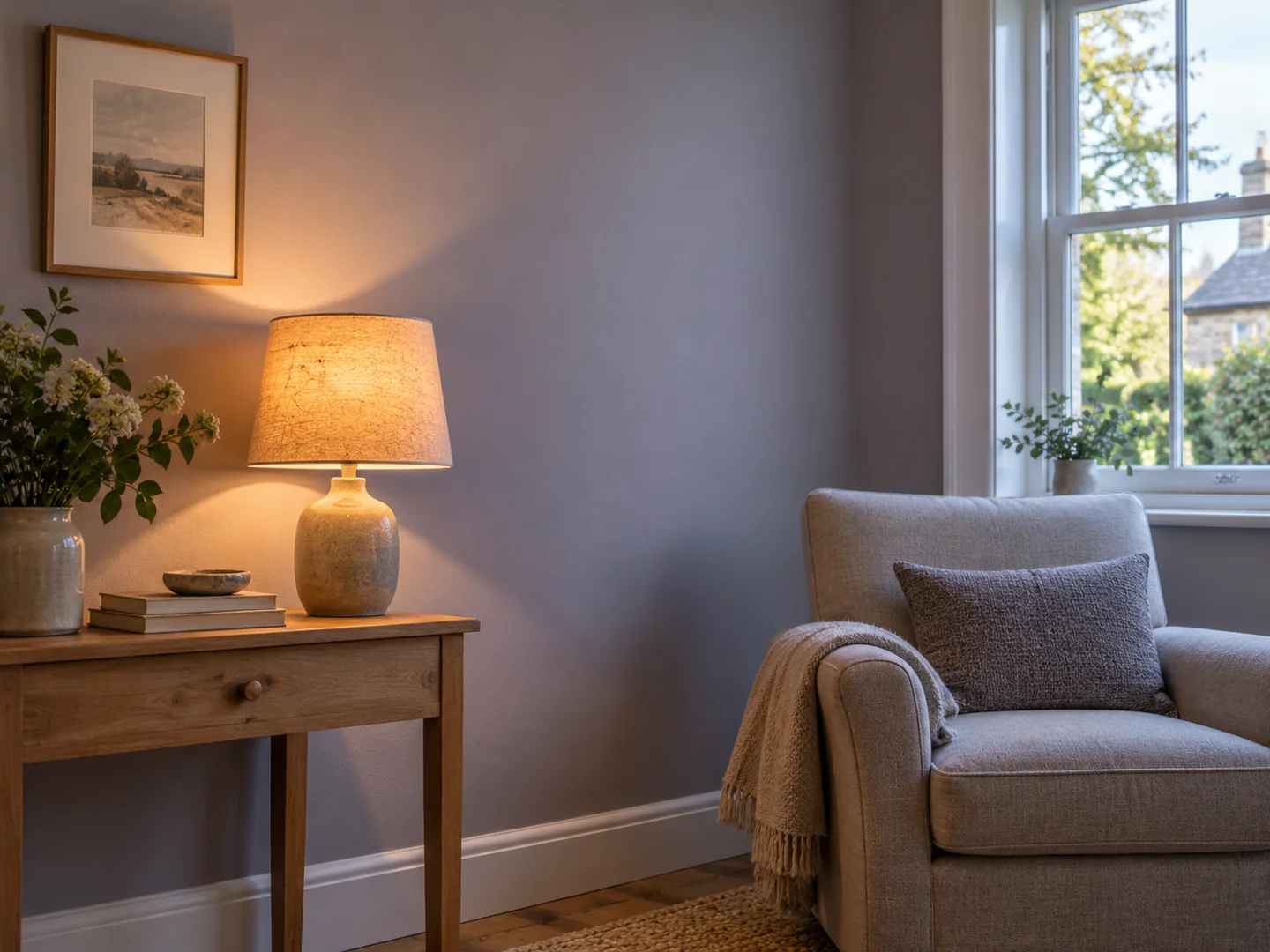
A grey wall can seem neutral at lunchtime and lilac after the lamps come on. Start by noting when the unwanted colour appears. Is it visible everywhere, only beside a cream curtain, or mainly under one lamp? That observation narrows the problem more effectively than buying another paint called warm grey.
Place the original sample or a newly painted board beside the wall. If both shift in the same light, the effect is likely part of that colour-and-light combination. If only one patch looks different, the finish, application or surface may also need checking. Do not try to diagnose a paint fault from a phone photograph alone.
Look at the neighbouring whites
A yellowish white can make a neighbouring grey appear cooler. Try holding a plain neutral object beside the wall, then remove it and look again. You are not conducting a laboratory test, but you can see how strongly the curtain, sofa or woodwork is influencing your impression.
If a single new textile created the problem, compare an alternative textile before planning a repaint. A grey that sits comfortably with the floor and sofa may not need to change because one cushion introduced an awkward relationship.
Where the evening appearance is the real issue, inspect the lamps you normally use. Different light sources can make colour comparisons harder. Consider the room's lighting as a whole, while keeping any replacement bulb within the fitting's specifications. Do not select a bulb purely to rescue one patch of paint at the expense of comfortable light.
Choose a replacement against the same test
If the grey still bothers you, sample a colour that moves clearly away from the unwanted cast. A slightly earthy stone or a more definite warm neutral may be easier to choose than another near-identical grey. Put both alternatives in the problem position and wait for the same evening conditions.
Avoid comparing only at the paint shop, where the light and surroundings are different. The useful candidate is the one that behaves acceptably in your room. It need not remain perfectly neutral all day; it simply needs to avoid the shift you know you dislike.