Draw the actual model
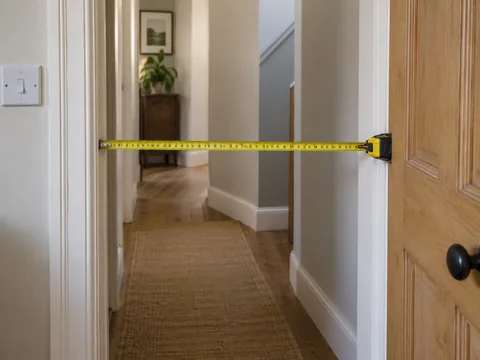
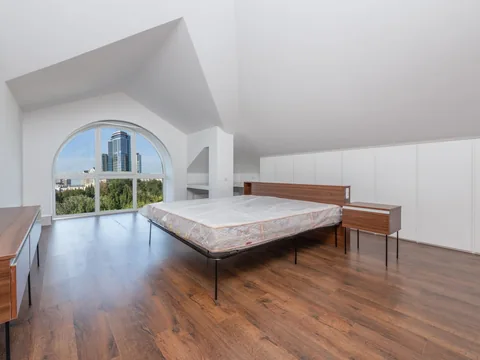
Use the proposed furniture's full dimensions, including arms, handles and projecting legs. A mattress size is not a bed-frame size, and a sofa's seat width is not its external width. If the product drawing leaves a dimension unclear, ask the retailer before relying on it.
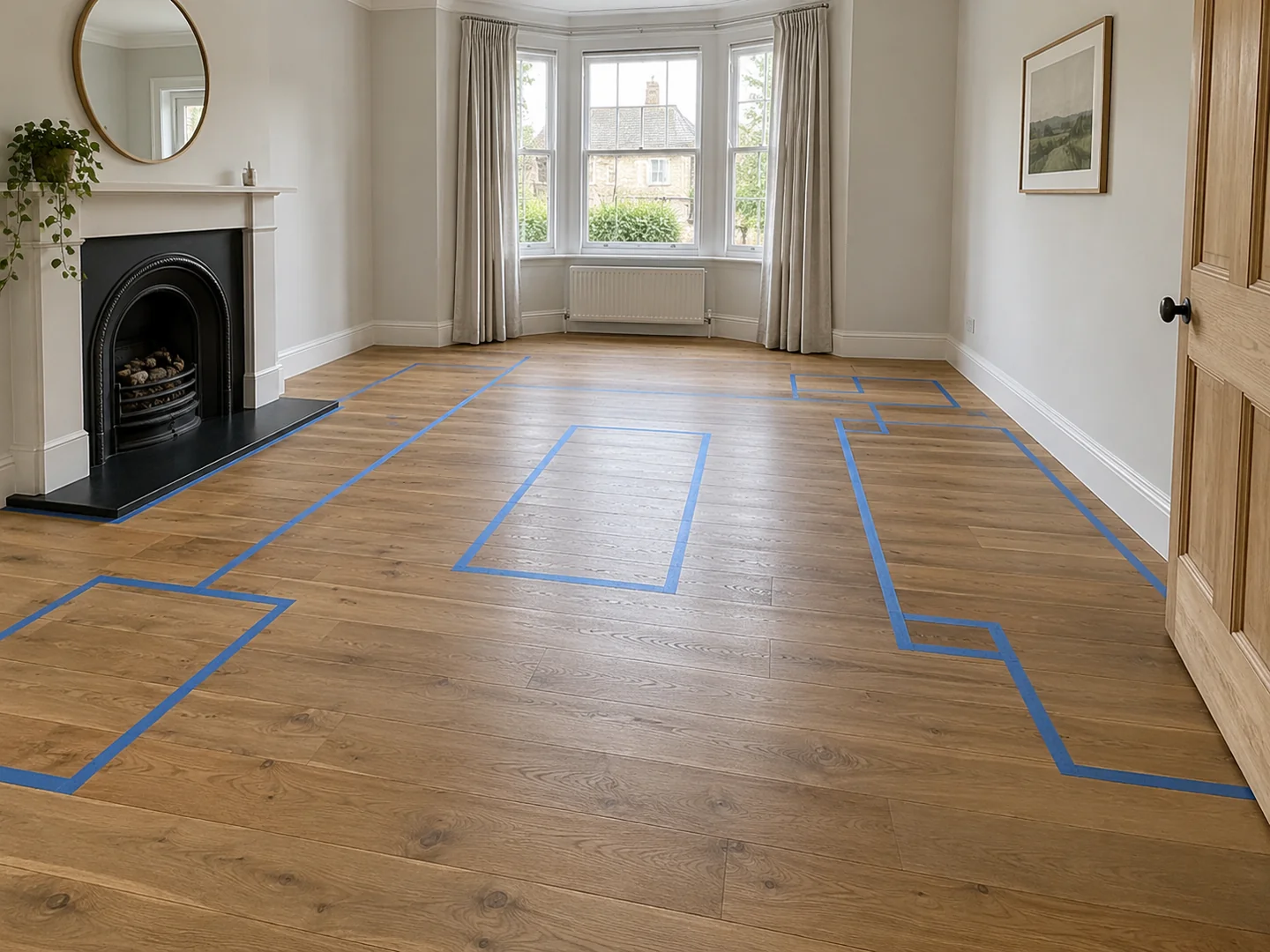
Mark the outline with a method suitable for the floor. Test any tape in a hidden place first and avoid leaving it on a finish longer than recommended. Paper shapes or loose markers may be preferable on a delicate surface, provided they do not create a slip or trip hazard during the test.
Add the things flat lines miss
Boxes or existing furniture can indicate the height and mass of the proposed piece. A tall cupboard feels different beside a route from a low bench occupying the same floor area. You do not need a perfect model; you need enough volume to notice whether the arrangement feels boxed in.
Draw door and drawer movements separately. Include a wardrobe's open doors, a dining chair pulled back and a sofa bed unfolded. If two movements use the same area, decide whether they must happen together. Occasional overlap can be manageable; a daily conflict needs a change.
Ask someone to sit in the proposed seating position while another person walks past. Include feet, a bag or the tray usually carried through the room. Test the household's actual mobility needs. A clearance that looks generous on paper may not suit the people and equipment using it.
Rehearse cleaning as well as sitting. Can the vacuum reach beside the unit, and can a lightweight table move without being lifted over another piece? If the furniture has doors with handles on both sides of a corner, try opening them in sequence. A small collision between handles can be invisible in the main footprint. Taking a few minutes to test these less photogenic movements often prevents the kind of irritation that persists long after a room's newness has worn off.
Record the small failures
Instead of judging the whole plan as good or bad, write down the specific problem: the chair catches the table, the cupboard blocks the door, the lamp has no safe cable route. Move one piece at a time and repeat that task. This makes it easier to identify the change that helped.
Photograph the outline from the doorway and from the usual sitting position. The doorway view shows the overall balance, while the seated view reveals what will dominate your daily experience. Neither view replaces walking through the space.
Remove the temporary markings after the test, especially before normal use of the room resumes. Keep the dimensions and a simple sketch. If you later choose a different model, repeat the affected part of the exercise rather than assuming that another two-seater or small cabinet has the same footprint. The value of the test is its connection to an exact piece of furniture.