Give each activity a realistic footprint
Start with the bed, since it is usually the least changeable large piece. Measure the frame and the access needed to use it, then place seating and a dining or work surface around what remains. Trying to establish every zone at once can produce a plan in which each looks plausible but none has enough room to function.
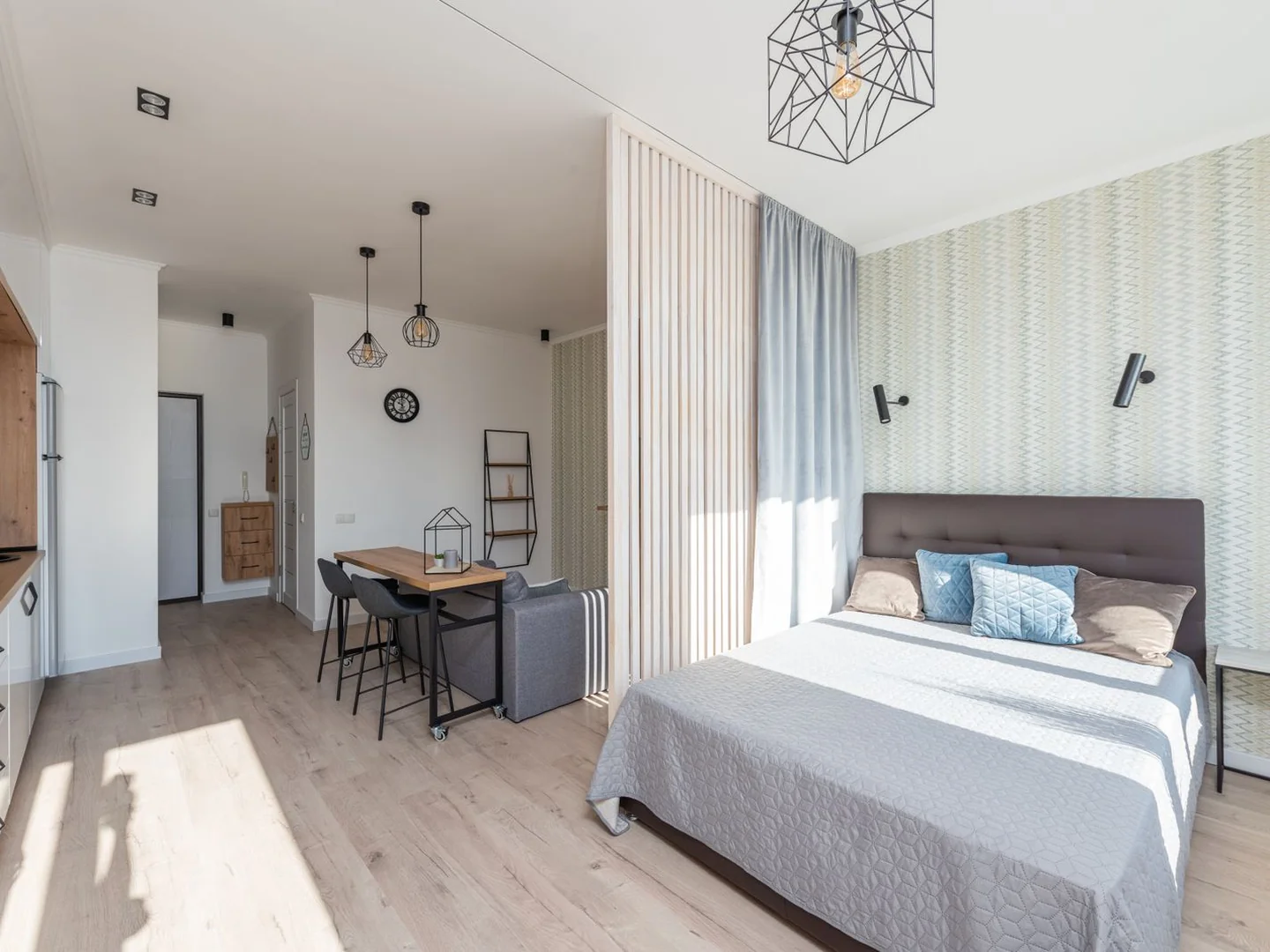
Some activities can share a surface. A dining table may also be a desk if the equipment can be put away and the working position is suitable. Other combinations are less successful. Using the bed as the only sitting place may be acceptable to one person and frustrating to another. Decide which separations matter to you rather than adding them because a studio photograph contains them.
Keep the entrance route obvious. Bags, shoes and coats need a place that does not spill straight into the sleeping or sitting area. A small amount of well-positioned storage near the door may improve the whole studio more than a large divider in its centre.
Let furniture indicate the change of use
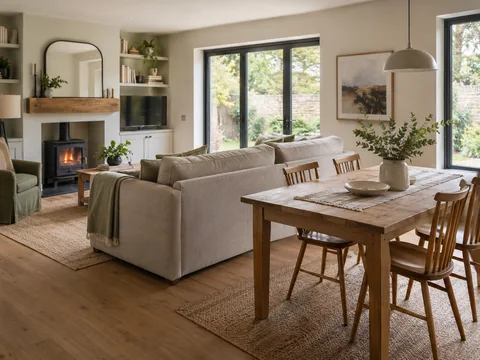
A sofa facing away from the bed can give the sitting area its own focus. The back becomes a boundary without closing the room. Check that the remaining route around it works and that its height does not block light from the only window. A lower piece may preserve more connection across the room.
A shelving unit used as a divider requires careful consideration of stability and the manufacturer's installation requirements. Do not assume that a unit intended to stand against a wall is safe in the middle of a room. Choose furniture explicitly suitable for the arrangement and secure it as instructed. Closed cupboards or opaque screens can also make the area behind them darker.
Sometimes the lightest division is enough. A change in furniture orientation, a bedside lamp and a distinct sitting group can make the activities legible without any physical screen. Start there before adding a tall object that permanently consumes floor and daylight.
Do a second plan with the proposed divider removed. If the room gains a useful route or better daylight while the activities remain clear, the divider may be unnecessary. If privacy from the entrance is the main concern, a shorter screen in a specific position could answer it without spanning the whole room. Any screen should be stable and suitable for its location. The point is to solve the actual view or use conflict, not to recreate permanent walls with a collection of movable obstacles.
Keep shared floor genuinely shared
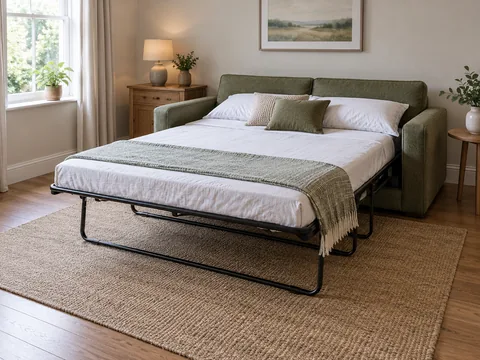
The same empty patch may serve as circulation by day and access to an opened sofa bed at night. That can work when the change is simple and predictable. It is less useful when several heavy pieces have to move. Write down the daily or weekly changes the plan demands and decide whether they are reasonable.
Do not count space for two simultaneous movements twice. A dining chair pulled out into the only route to the bathroom creates a conflict even if the table and route each look fine separately. Test with chairs occupied, wardrobe doors open and the bed in its normal state.
Furniture on castors can be moved, but that does not automatically make a layout flexible. The item still needs a destination, and the castors must suit the floor and remain stable during use. A smaller fixed piece can be more convenient than a larger movable one that is constantly in somebody's way.
Store for transitions
In a studio, clutter often comes from an activity that has finished but has nowhere to go. Work papers remain on the dining table; bedding sits on a chair; laundry occupies the entrance. Give each transition a nearby storage place rather than adding general-purpose cupboards without deciding their contents.
Keep the frequently used items reachable. Storage above head height may suit occasional belongings, but it is inconvenient for things used several times a day. Avoid making daily life depend on climbing or moving furniture to access a box. Any tall storage should be installed and anchored according to its instructions.
Leave some visible floor and wall unassigned. A studio does not need to resemble three fully furnished rooms to function as a home. If a dedicated dining table prevents comfortable seating, a different eating arrangement may be the sensible choice. The useful plan is the one that supports the activities you actually do while leaving a clear, uncomplicated way to move between them.