Start by clearing, not covering
Remove items that have settled on the worktop without needing to live there. Keep the daily kettle, useful utensils and frequently used equipment accessible, then look at the original kitchen again. A dated cabinet colour can feel less dominant when the surfaces above it are not crowded with unrelated packaging.
Choose one section as the main preparation area and protect it from decorative additions. A kitchen that looks coordinated but needs clearing before every meal is difficult to enjoy. The amount of empty worktop should reflect how you cook rather than the styling in a showroom photograph.
Avoid treating self-adhesive wraps as an automatic rental solution. They introduce questions about permission, surface compatibility, heat and removal. If the aim is a modest visual change, begin with movable objects that do not alter the cupboards at all.
Pick a small material group
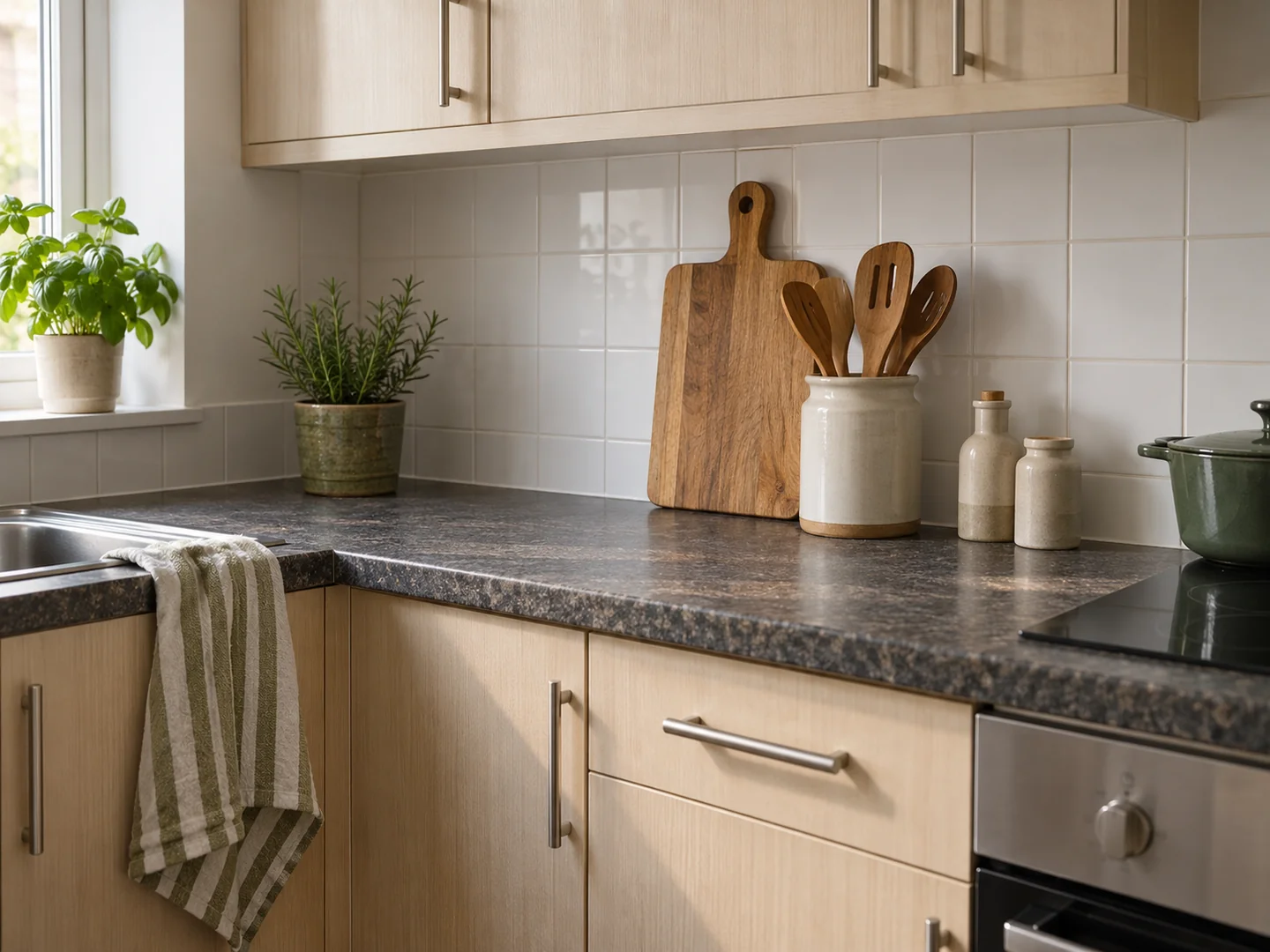
Look at the fixed finishes: cabinet colour, worktop, floor and metal fittings. Choose two or three materials that sit comfortably alongside them. A timber board, plain ceramic utensil pot and striped tea towel can give the eye a clear rhythm without needing every object to match.
Use items with actual jobs. A board can be stored upright only in a stable, suitable position away from heat and where it can dry properly. A utensil pot should hold the tools you use, not a decorative collection that becomes dusty. A bowl belongs on the worktop only if it earns the space.
Textiles are a low-commitment way to test colour. Try a tea towel or a washable mat designed for the location before buying several accessories in the same shade. Check laundering and care requirements, and keep fabrics away from hobs, heaters and other heat sources.
Reuse the colour you already have
Check your cupboards for useful objects before shopping for a new set. A bowl brought forward from storage may connect with the tea towel, and a board you already use may provide enough timber against pale cabinets. The room does not need a matching collection bought on the same day.
If one necessary appliance has a strong colour, decide whether to repeat a little of it elsewhere or let it stand alone. Either can work. Buying several accessories solely to justify the toaster's colour can leave you with more objects than usable worktop.
Give the awkward things a place
Washing-up liquid, sponges and recycling are part of the real kitchen. A simple tray can group suitable sink-side items, provided it is easy to clean and does not leave trapped water against a vulnerable surface. Do not transfer cleaning chemicals into unlabelled decorative containers.
Store occasional appliances only where they can be safely lifted and used. Keep ventilation and operating clearances in line with their instructions. A closed cupboard is not automatically an appropriate operating location just because hiding the appliance looks tidier.
Step back from the doorway when you finish. If the room still feels busy, remove an addition rather than buying another matching object. The cupboards can remain visibly themselves while the working surfaces develop a more deliberate arrangement. That is often enough to make an unfamiliar kitchen feel easier to use.