Prepare before the packing pile grows
Switch off and unplug the lamp, then allow it to cool before handling removable parts. Read the manufacturer's instructions if the shade, bulb or other components are unfamiliar. Integrated light sources are not an invitation to dismantle the fitting; remove only the parts designed to come off.
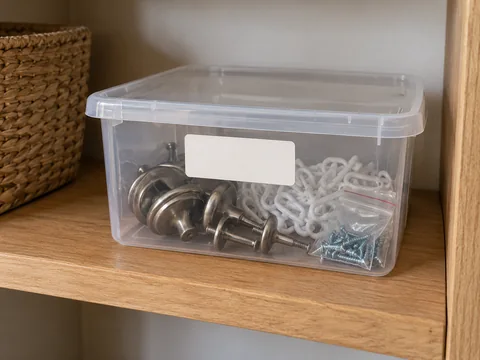
Photograph the assembled lamp and any simple sequence needed to refit a removable shade. Put small rings and other permitted hardware in a labelled bag associated with that lamp. Avoid leaving them loose inside a large box where they can scratch the base or disappear into packing paper.
For rechargeable lamps, follow the maker's transport and storage instructions, including any battery requirements. Tell a removals company about relevant battery-powered items and follow its handling rules. Do not assume the routine for a mains table lamp applies to every portable model.
Give the shade its own protection
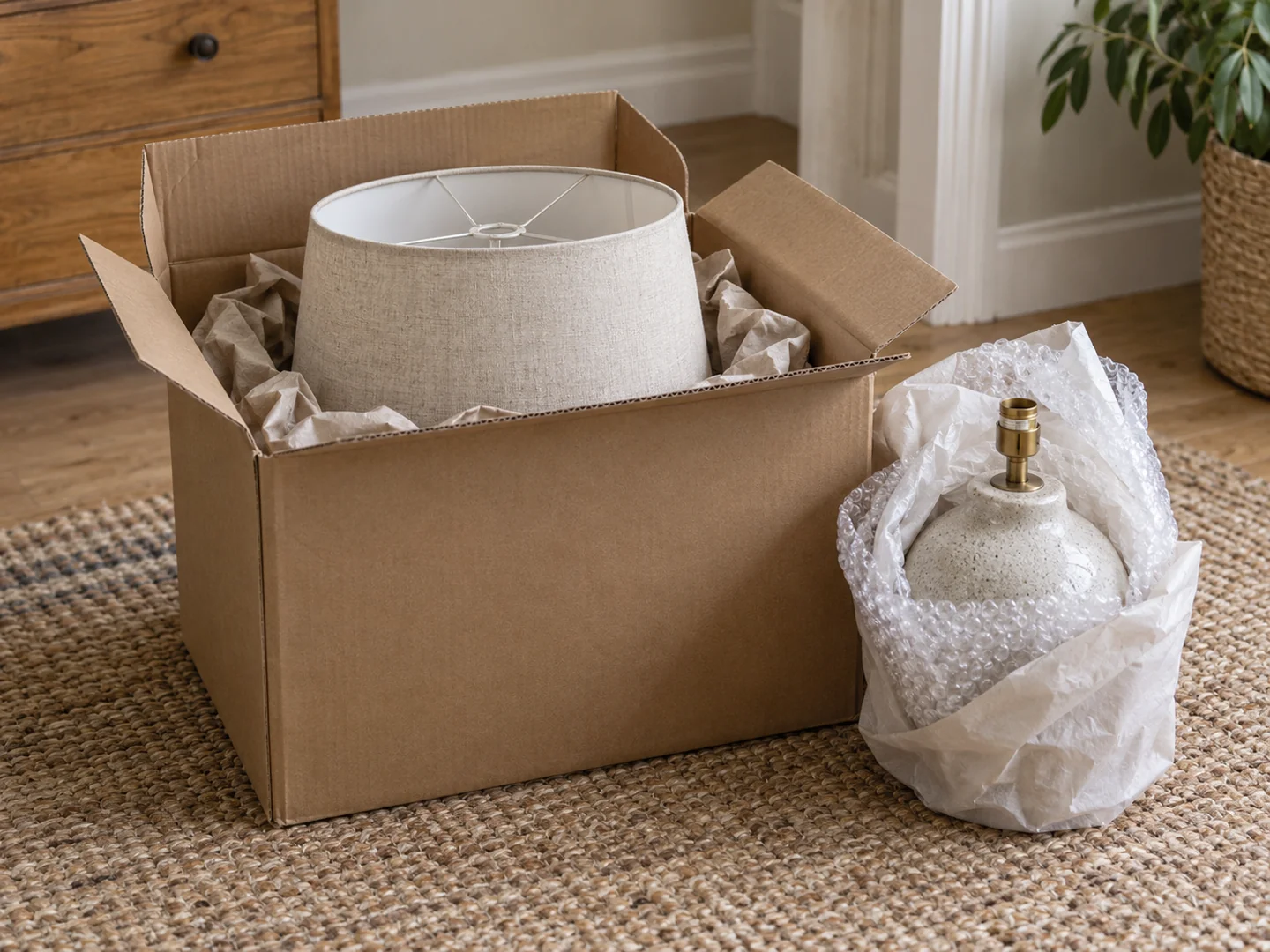
A fabric shade can be damaged by surprisingly little sideways pressure. Use a clean box that supports the packed arrangement without squeezing the shade. Keep it upright where its construction requires and protect it with suitable clean material according to its care guidance. Do not pack books or other heavy objects inside it to save space.
Avoid nesting shades unless their design and packing guidance make that appropriate. Two similar cones may still rub, distort each other or catch at their fittings. A separate box is often easier to handle than trying to extract a tightly nested group later.
Label the box so it is not treated as a firm surface for stacking. The label does not make the package crushproof, so place it accordingly during the move. Consider carrying especially delicate shades separately if you can do so safely.
Stop the base moving
Pack the base with cushioning suitable for its material and weight. Ceramic, glass and painted metal have different vulnerabilities. Protect projecting switches and fittings without applying tape directly to a delicate finish. Keep the lead arranged without tight bends or strain at its entry point.
Do not lift a lamp by its cable, shade or a decorative part that is not intended as a handle. Large or heavy pieces may need additional help. A floor lamp with permitted separable sections should have each part labelled so the assembly remains understandable.
At the new home, inspect the lamp before reconnecting it. Check for damage to the base, fittings, lead and plug, and obtain appropriate advice if anything looks wrong. Reassemble only as instructed, using the correct compatible bulb where replaceable. Place it on a stable surface, then decide where its light belongs in the new room rather than automatically recreating its old position.