Cover the useful area
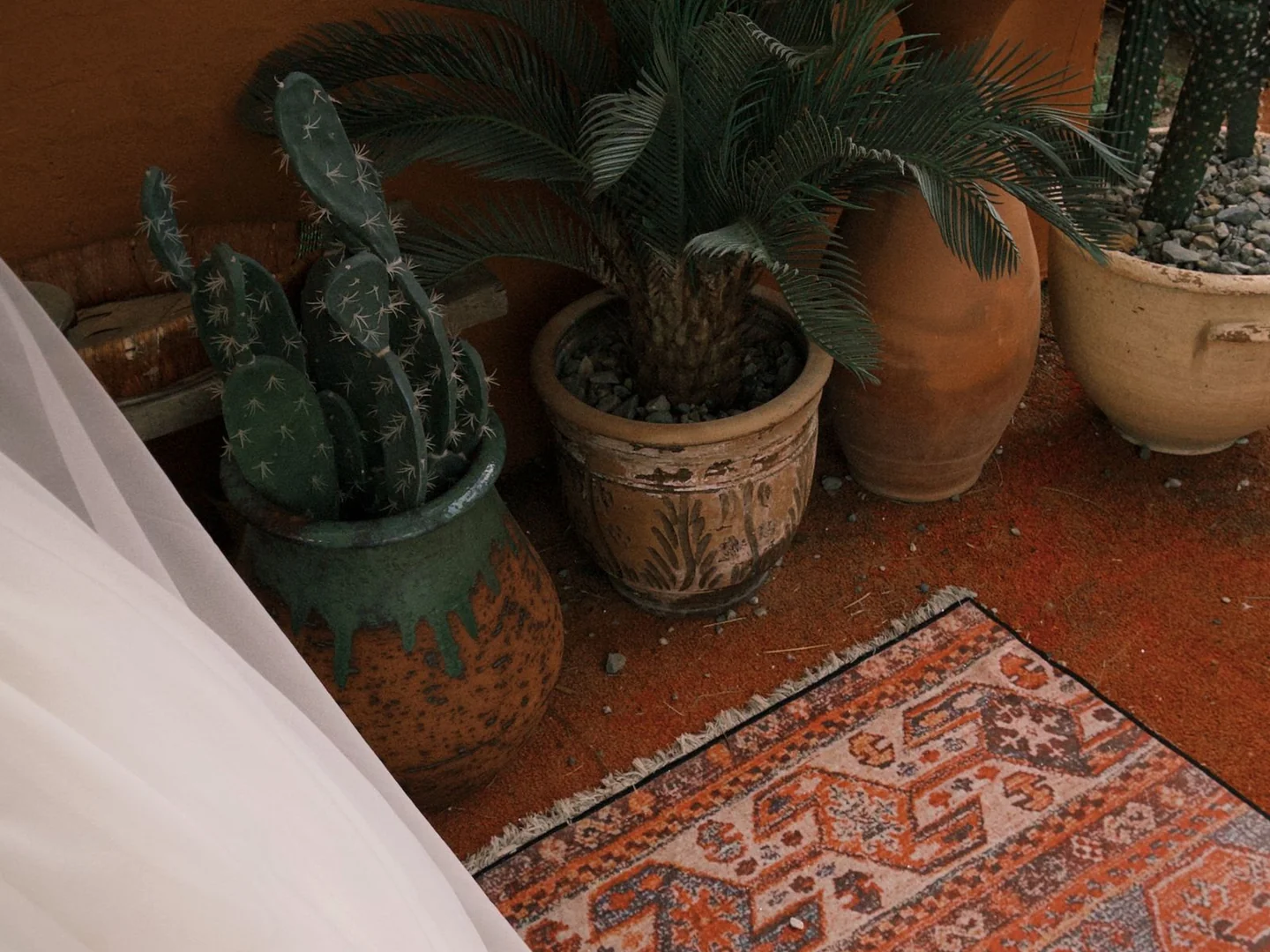
Decide what the rug is meant to do. Beneath a seating group it can connect the sofa and chair; beside a bed it can provide a different surface underfoot. Trying to conceal the whole floor with one oversized rug may obstruct doors or create difficult edges without improving the room's arrangement.
Measure with furniture in place. Include the path people take through the room and the space a door needs to open. A rug that just clears a door when empty may behave differently once its pile lifts or the underlay adds thickness. Check the actual combined construction, not the rug's width alone.
Look at the floor around the proposed edges. A contrasting border can be deliberate. You do not need a rug that nearly touches every wall to make an awkward flooring colour less dominant. A well-positioned smaller area can give the eye another clear material to focus on.
Match the underlay to both surfaces
Choose an underlay explicitly suitable for the rug and the flooring beneath it. A product intended for a hard floor may not suit carpet, and some floor finishes have restrictions on backing materials. Ask the floor or underlay supplier where the existing material is uncertain.
If there is underfloor heating, check the compatibility and combined covering limits for the actual system, floor, rug and underlay. Do not assume a general heat-suitable label settles every combination. Keep any required access and ventilation features uncovered.
Avoid improvised tape on a floor that is not yours. Adhesives may leave residue or affect the finish, and a temporary promise on packaging is not a universal guarantee. If the rug will not stay safely in place with an appropriate approved arrangement, choose another rug or position.
Test the edges in daily use
Walk the normal route in and out, pull back a chair and open the nearby drawers. Check whether a corner catches a foot or whether a chair leg repeatedly pushes the rug out of shape. These are reasons to change the arrangement rather than accepting a daily nuisance because the colour is right.
Keep the surface beneath clean and dry according to the relevant care guidance. A rug should not hide a damp patch, ongoing leak or damaged floor that needs attention. Raise those issues separately before covering them.
For a future move, consider whether the dimensions suit ordinary furniture arrangements elsewhere. A rug selected for a useful seating area is often easier to place again than one chosen solely to disguise an unusual strip of flooring in the current flat.