Distinguish storage from the wet area
Look at where water splashes during ordinary use of the basin, bath or shower. A shelf that stays dry in a photograph may receive water every morning. Choose furniture intended for the location and follow its care instructions. A painted wooden cabinet is not automatically suitable simply because its colour matches the bathroom.
Keep ventilation openings and maintenance access clear. Storage should not cover an extractor or make a plumbing connection inaccessible. If you are adding fixed furniture near electrical equipment or altering services, obtain appropriate professional advice rather than relying on a general layout suggestion.
Put daily products within easy reach
Group the items used together and choose a shelf or drawer that can be reached without stretching over the basin. A mirrored cabinet may suit small daily toiletries, while towels need a deeper compartment. Check the internal depth and door swing before buying a unit based on its front dimensions.
Tall bottles need headroom to be removed, not just room to stand. Pump dispensers also need space to operate if used on the shelf. Avoid packing the top shelf so tightly that one bottle falls when another is lifted. A small number of current products is easier to manage than every spare supply beside the basin.
Keep medicines and products requiring particular conditions according to their labels. The bathroom's warmth or humidity may make it unsuitable for some items. Do not assume a closed cabinet creates the conditions specified on the packaging. Cleaning products also need appropriate secure storage, particularly where children may have access.
Separate unopened spares from products currently in use. The spare collection can often live in a drier cupboard elsewhere, leaving the bathroom cabinet less crowded. Check package instructions before choosing that location. When a new bottle is opened, move it to the daily-use area and remove the empty one appropriately. This simple distinction makes it easier to see what is running low without lining every shelf with duplicates or buying extra storage for supplies that need not be beside the basin.
Store towels where they can stay dry
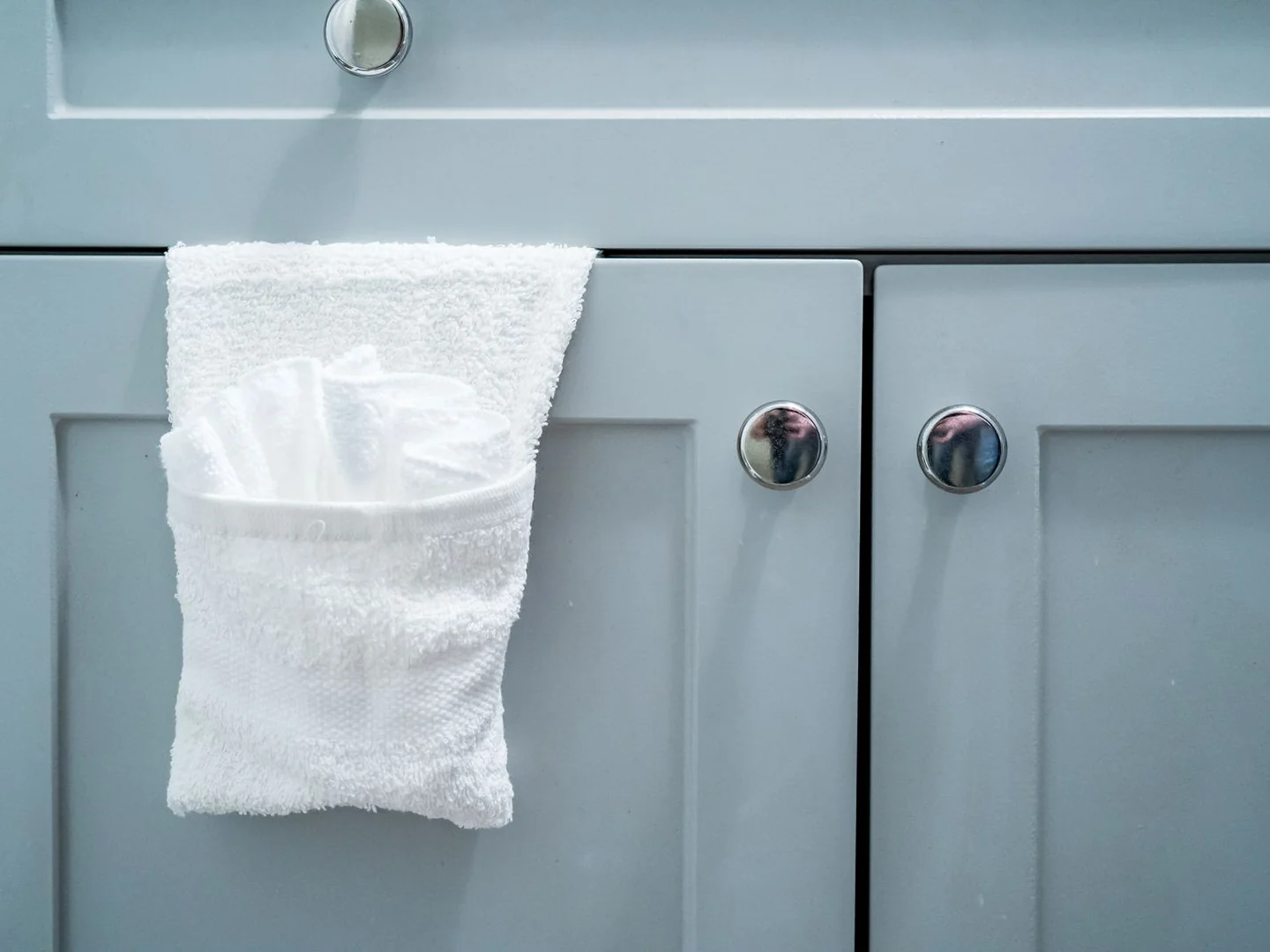
Fresh towels should not be pressed against damp surfaces or returned to a closed cupboard before they are dry. Leave the storage suited to clean, dry linen and provide a separate place for towels currently in use. A crowded shelf beside the shower may be convenient but repeatedly expose the stored stack to moisture.
Choose containers you can lift and clean. A woven basket may be attractive but could be unsuitable for a persistently damp spot; a wipeable container may be easier to maintain there. Check the product's intended use instead of assuming all baskets behave the same way.
Use the bathroom for a few days after rearranging it and look for the items left out. A toothbrush, hairbrush or face cloth may need a more convenient place than the one that looked tidy initially. Adjust those specific locations. The cupboard does not have to hide everything, but it should keep the daily routine from spreading across every available edge.