Watch what reaches the desktop
For a few working sessions, notice which objects stay beside your hands and which appear only occasionally. A notebook, headset and current file may need immediate access. Spare paper, cables and older projects can live elsewhere. Storing everything at the desk can consume the surface needed to work.
Separate equipment from materials. A printer has power, paper-feed and ventilation requirements, while a stack of notebooks simply needs an appropriate shelf. Check the manufacturer's instructions before putting operating equipment inside a closed cupboard. A drawer unit that visually tidies the desk can create an unsuitable equipment enclosure.
Think about the work itself. Drawing, sewing and paperwork need different surfaces from computer use. A small organiser that suits pens may be irrelevant to larger tools or fabric. Choose the categories from the activity rather than from a photograph of a neatly accessorised desk.
Protect legroom and chair movement
A pedestal beneath the desk reduces the space available for legs. Measure the clear width and depth with the chair in its working position. The unit should not force the user to sit off-centre from the keyboard or work surface. If it does, move the storage outside the desk footprint or choose another form.
Drawers need room to extend without hitting the chair or the user's knees. A drawer that opens only when the chair is pushed back may be acceptable for occasional supplies, but awkward for something used every few minutes. Place frequent items where the movement is straightforward.
For sustained computer work, storage is only one part of workstation suitability. The HSE's home-working guidance supports assessing the user, equipment and working arrangement together. Do not choose a desk configuration solely because the drawers fit. Where an employer's assessment applies, use that process to establish the necessary setup.
Put current work near the working hand
A shallow tray can hold the current project without claiming the whole desktop. Size it for the largest sheet or notebook, and leave enough room to lift the contents without turning the tray sideways. If several projects are active, separate folders may be clearer than a growing stack.
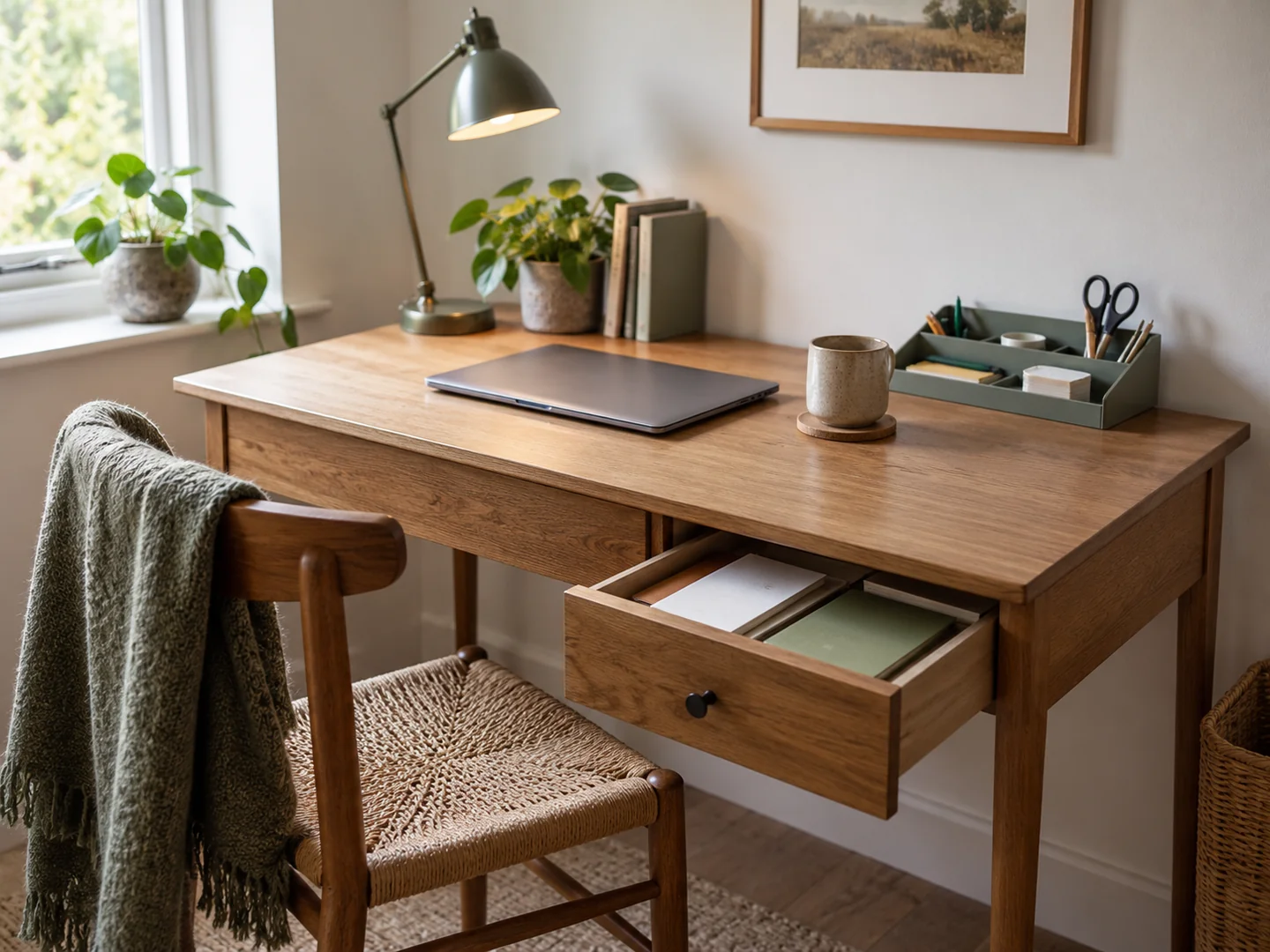
A drawer near the dominant hand can suit small frequently used objects, but the best side depends on the work and the room. Try the position before fixing a storage unit permanently. Reaching across a keyboard for a pen repeatedly is a small inconvenience that can often be removed with a simple change.
Use vertical storage selectively. A shelf within easy reach may hold reference books, while a high shelf is better reserved for lighter, occasional belongings. Follow the shelf's installation and load instructions. Avoid putting heavy items where they must be lifted over the working position.
Keep wires out of the storage routine
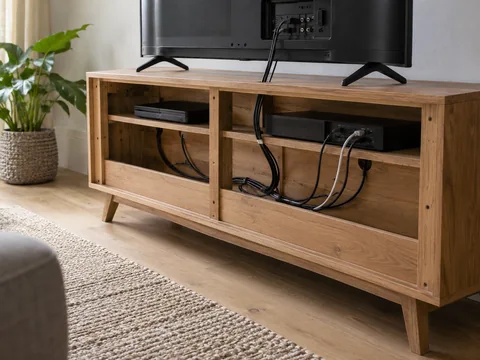
Charging leads should not be pulled tight when a drawer opens or a trolley moves. Check the route with the furniture in use, not only when everything is closed. Do not trap cables under castors or run them across the path to the desk.
Store spare leads in a separate labelled container so they are not confused with connected cables. Keep adapters with the devices they serve where possible. An unidentified collection can become difficult to use even when it is hidden neatly inside a drawer.
If a movable trolley is part of the plan, establish where it stands during work and where it goes afterwards. Its handle and open trays add to the footprint. Mobility is useful when there are two suitable positions, not when the trolley is continually pushed out of the way.
Make ending work a short process
At the end of a session, the current papers should have a clear destination and the small tools should return without detailed rearrangement. If putting things away takes longer than the work warrants, reduce the number of categories or provide a larger space for the active project.
Leave a little unassigned capacity for changes, but avoid turning every empty compartment into storage for unrelated household items. A desk drawer filled with batteries, receipts and spare keys may be organised perfectly and still fail the work it was meant to support.
Review the arrangement after a normal week. The objects left on top are useful evidence: perhaps they need closer storage, or perhaps they genuinely belong on the desktop. The goal is a working surface with enough room for its task and storage that removes interruptions, rather than a desk that must look empty at all times.