Measure your books
Take a few examples from the collection: a paperback, a hardback and the largest book you expect to shelve upright. Measure their depth and height. A shelf for ordinary paperbacks can be shallower than one intended for large art books, so a single depth may not suit every part of the collection.
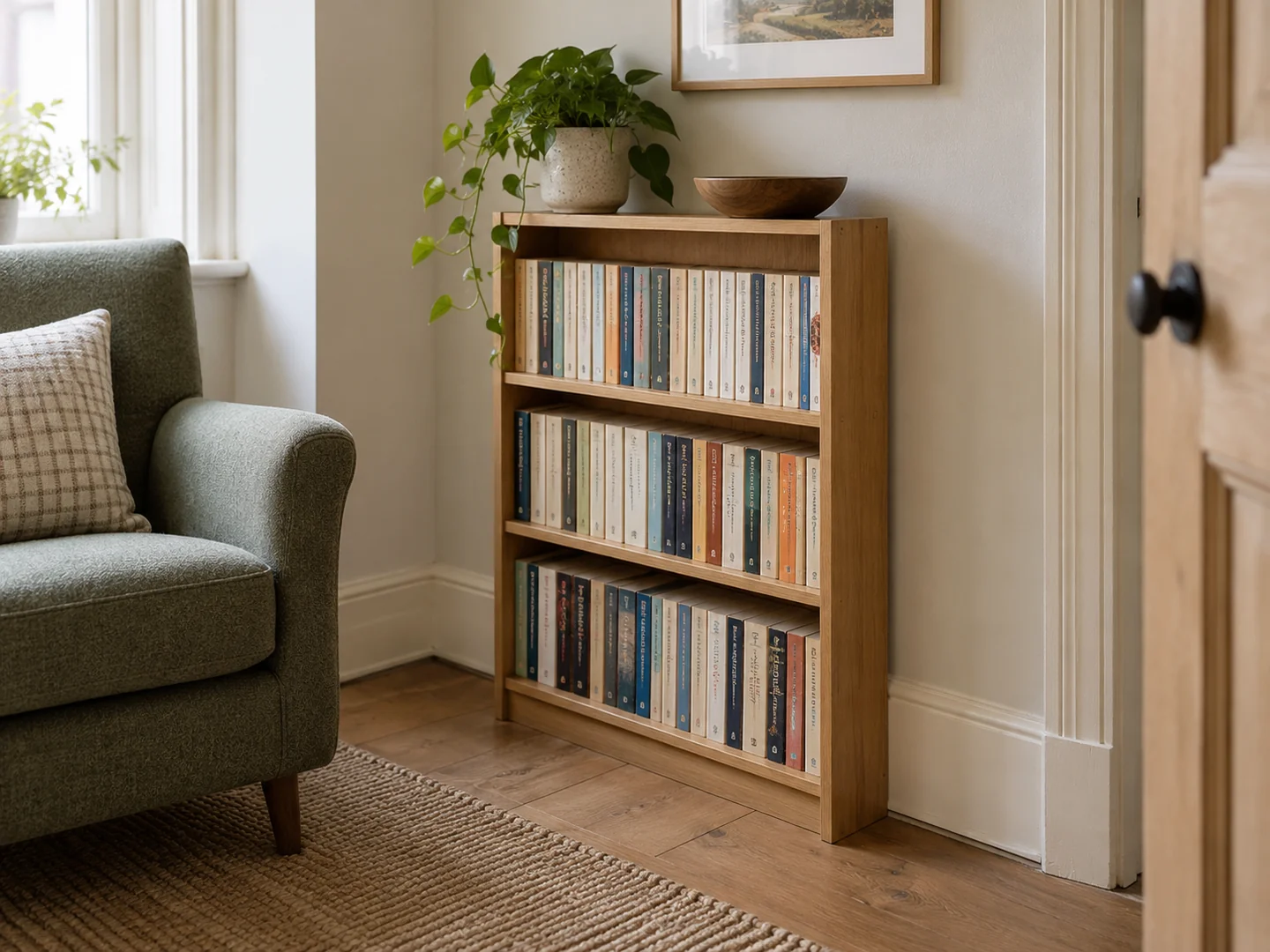
Check the internal shelf dimensions, not only the bookcase's exterior depth. The back panel, frame and any front lip reduce usable space. If books project slightly, decide whether that is acceptable before buying; a narrow walkway may make projecting corners inconvenient.
Avoid creating an invisible row
Two rows of books can increase capacity but make retrieval harder. The back row is hidden, and the front must move to reach it. That may suit rarely used books, but it is frustrating for a collection you browse frequently. A shallow second bookcase elsewhere can sometimes be more useful than one deep unit packed twice over.
Adjust shelf heights to the books rather than spacing every shelf equally. Keep enough room above them to remove a volume comfortably. Oversized books can have a separate section so the whole case does not need generous gaps designed around one tall item.
Books are heavy in quantity. Follow the shelf load limits and the furniture's fixing and anchoring instructions. A board that looks substantial is not a reliable indication of its capacity, particularly over a long span.
Consider dusting and retrieval together. A small gap behind the books can be manageable, but a broad unused strip becomes difficult to clean once a shelf is full. Do not fill it with unrelated objects solely to occupy the depth; that makes removing a book a more complicated task.
Assess the room from the side
A deep bookcase can feel unobtrusive when viewed head-on and bulky beside a doorway. Mark the full projection, including skirting that holds it away from the wall. Check the remaining route and the view from nearby seats. Choose depth for the collection you own, then let the overall width and shelf arrangement provide the capacity, rather than using deep furniture to conceal a collection that is difficult to access.