Keep the original information
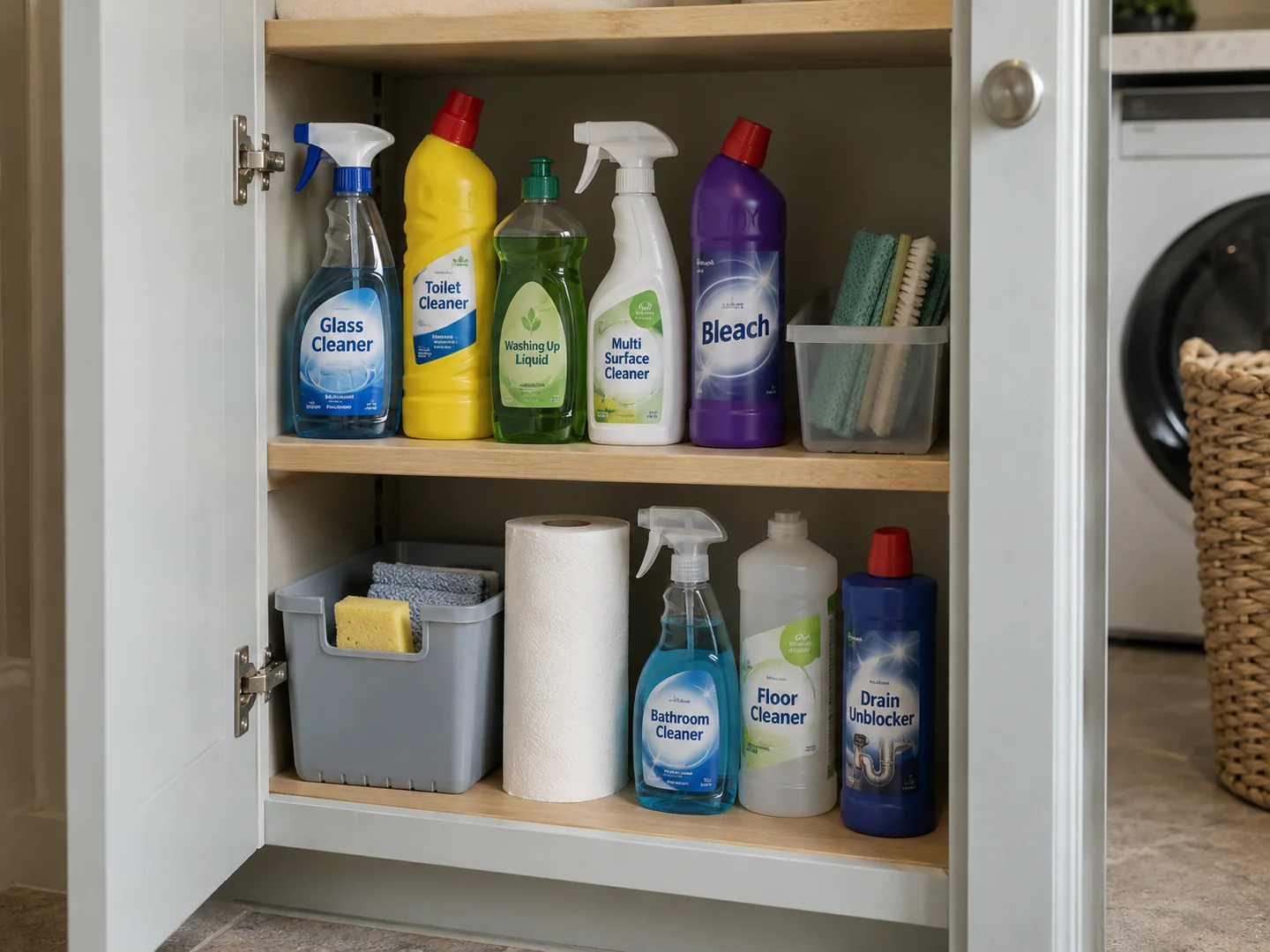
Cleaning products should remain in their original containers with labels intact. RoSPA's household safety guidance also advises closing lids securely and storing products out of children's reach, preferably in a secure cupboard. A visually matching collection of unlabelled bottles is not a suitable substitute for the original packaging.
Follow each product's storage instructions, including any restrictions about heat, mixing or keeping it away from particular materials. Do not combine leftovers into a single container to save space. This article concerns cupboard organisation, not chemical compatibility or cleaning mixtures.
Arrange the contents by the task
Group the supplies normally used together, but keep incompatible products separated according to their labels. A removable tray can make a small group easier to lift, provided it is suitable for the containers and does not conceal their identification. Keep bottles upright where the instructions require it.
Measure the tallest spray bottle before choosing shelf spacing. A shelf adjusted for small containers can leave larger ones lying on their sides or stored outside the cupboard. Leave enough headroom to remove a bottle without catching its trigger or lid on the shelf above.
Put heavier containers at a manageable height. The best position depends on the user and the cupboard, but avoid an awkward overhead lift. Keep the floor around the cupboard clear so carrying a caddy does not require stepping over a vacuum hose or bag.
If several adults share the cupboard, keep the arrangement understandable without relying on colour alone. Similar bottles can contain different products, and packaging may change when supplies are replaced. A broad shelf category can help locate something, but the label remains the authority for identifying and using it. Avoid filling a caddy with so many containers that their names face inward and cannot be read. A slightly smaller collection with visible labels can be easier to use than a tightly packed kit containing every product in the home.
Leave room for the equipment
A vacuum, mop or brush needs its own measured space. Wet equipment should be dried and stored according to its instructions rather than pressed against clean cloths or cupboard panels. Hooks and holders must be suitable for the item's weight and installed correctly.
Retain access to any pipes, valves or household equipment inside the cupboard. If the space is beneath a sink, check for leaks before storing absorbent materials there. A plastic tray can catch a minor drip temporarily, but it does not replace fixing the leak.
Review the cupboard when replacing supplies. Remove empty containers appropriately and check what is already present before adding duplicates. Keep secure storage functioning even when the cupboard is busy; a child-resistant cap does not make a bottle safe to leave within reach. The useful arrangement is one that remains identifiable, accessible to the intended adults and appropriately secured after an ordinary cleaning session.