Group by where the linen goes
Separate bedding for different beds before choosing containers or shelf divisions. Similar white sheets can be difficult to distinguish when folded, especially if several mattress sizes are in use. A simple label on the shelf or a grouped set can save repeated unfolding.
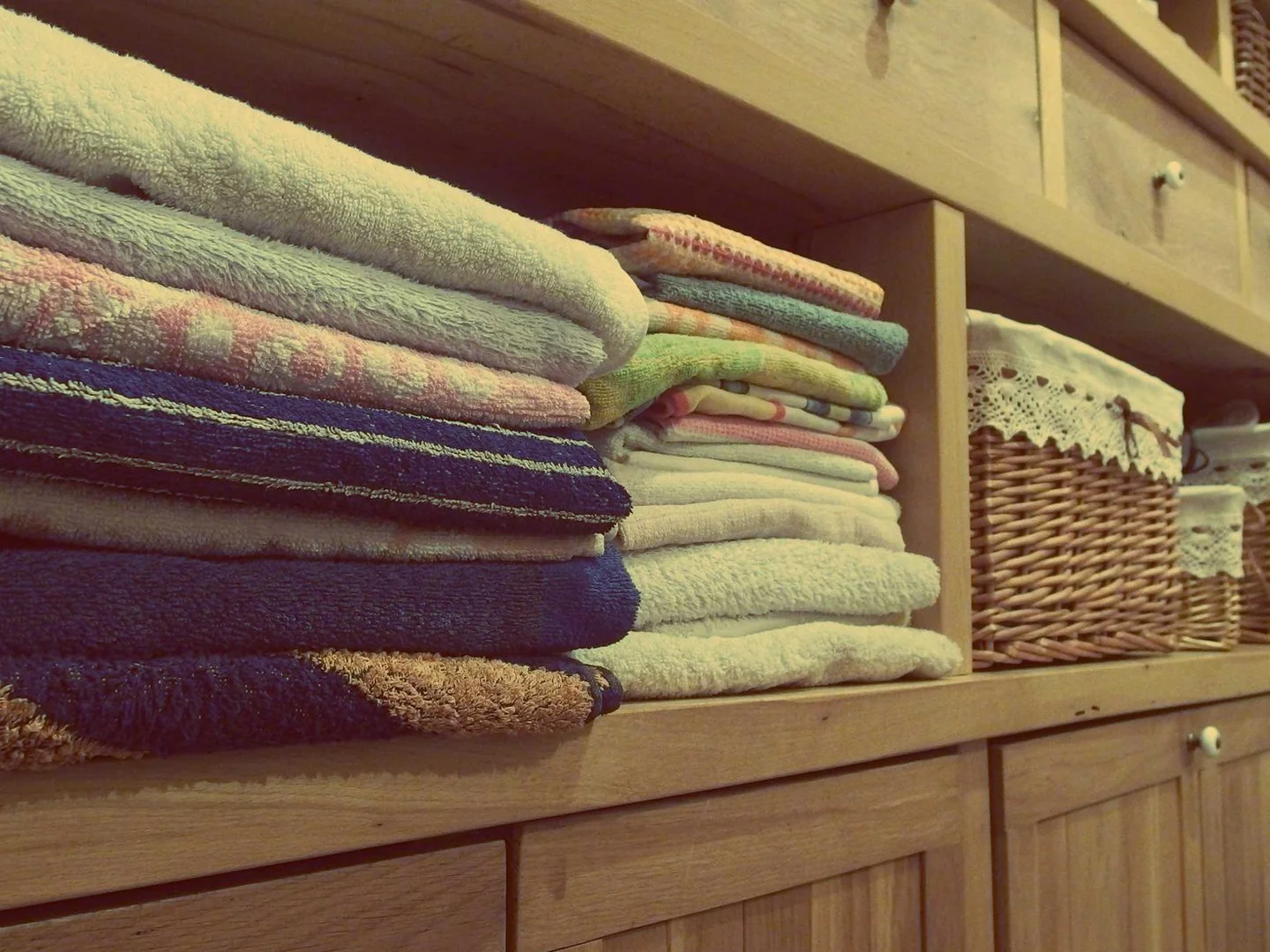
Keep towels, table linen and bedding in distinct areas where possible. They are used at different times and often need different stack heights. Avoid making one tall pile simply because the fabrics have a similar colour. The useful category is the task they serve.
One option is to keep each bedding set together, while another is to group sheets, covers and pillowcases separately. Choose according to how the household changes beds. Sets work well when the same pieces are normally used together; separate groups can be more flexible when items are mixed. Try one shelf before reorganising the whole cupboard. The test is whether the next changeover becomes simpler, not whether every bundle has the same shape.
Keep a small, clearly defined place for damaged items awaiting a decision. Otherwise a torn pillowcase can return to the usable pile after each wash and create the same surprise repeatedly.
Adjust the shelves to the folded items
Fold a representative set as you normally would and measure its height and depth. A shelf deep enough for two rows may hide the back row unless those items are rarely needed. If the cupboard is very deep, a removable container can make the rear section easier to reach, provided it is not too heavy when full.
Leave space above each stack for a hand. A perfectly filled compartment can be difficult to use without dragging the top item against the shelf above. Shorter stacks may require an extra shelf but are often easier to keep orderly than one high pile.
Put the regularly used sets at a comfortable height. Spare guest bedding can occupy a less convenient shelf, but avoid storing bulky heavy bundles overhead. Consider who changes the beds and whether they can retrieve the items without an awkward lift.
Keep storage conditions in mind
Only put linen away when it is dry, and follow the fabric's care instructions. Do not compress a damp load into a closed cupboard to clear the washing area. If the cupboard smells musty, investigate the conditions rather than masking the smell with fragranced products.
Where a cupboard contains a hot-water cylinder or other equipment, preserve required ventilation and maintenance access. It is not simply an empty storage cavity. Check the equipment guidance before adding shelves or piling textiles around it.
Leave room for the set that is currently on the bed. A cupboard filled to capacity while the household linen is in use will overflow on changeover day. This small allowance makes the arrangement more realistic. When putting laundry away feels straightforward, the cupboard is less likely to develop a second, temporary pile somewhere outside its door.