Measure a person’s use, not the sofa back
A throw folded over an arm needs very little visible area. The same throw spread across somebody sitting with their legs up needs much more. Decide which role matters before choosing a size from a styled photograph.
Use an existing blanket or sheet to test the coverage you want. Measure it while it is spread in a comfortable position, allowing for the part that wraps around the body rather than lying flat. If two people will share it, test that arrangement rather than assuming a label such as large is enough.
Check the feel where it touches skin
A textile that looks appealing on a chair may feel too rough against bare arms. Handle a sample or see the material in person where possible. Fibre names alone do not describe every weave, finish or personal response.
Consider weight as well as warmth. A substantial blanket may be pleasant while sitting still but awkward to fold or move repeatedly. A lighter throw may suit a room where it is used briefly and put away often.
Give it somewhere to rest
When not in use, the throw needs a position that does not trail into a walkway or get caught beneath a chair. A folded place on the sofa, a suitable basket or a shelf can work. Check the fabric will not snag on the storage surface.
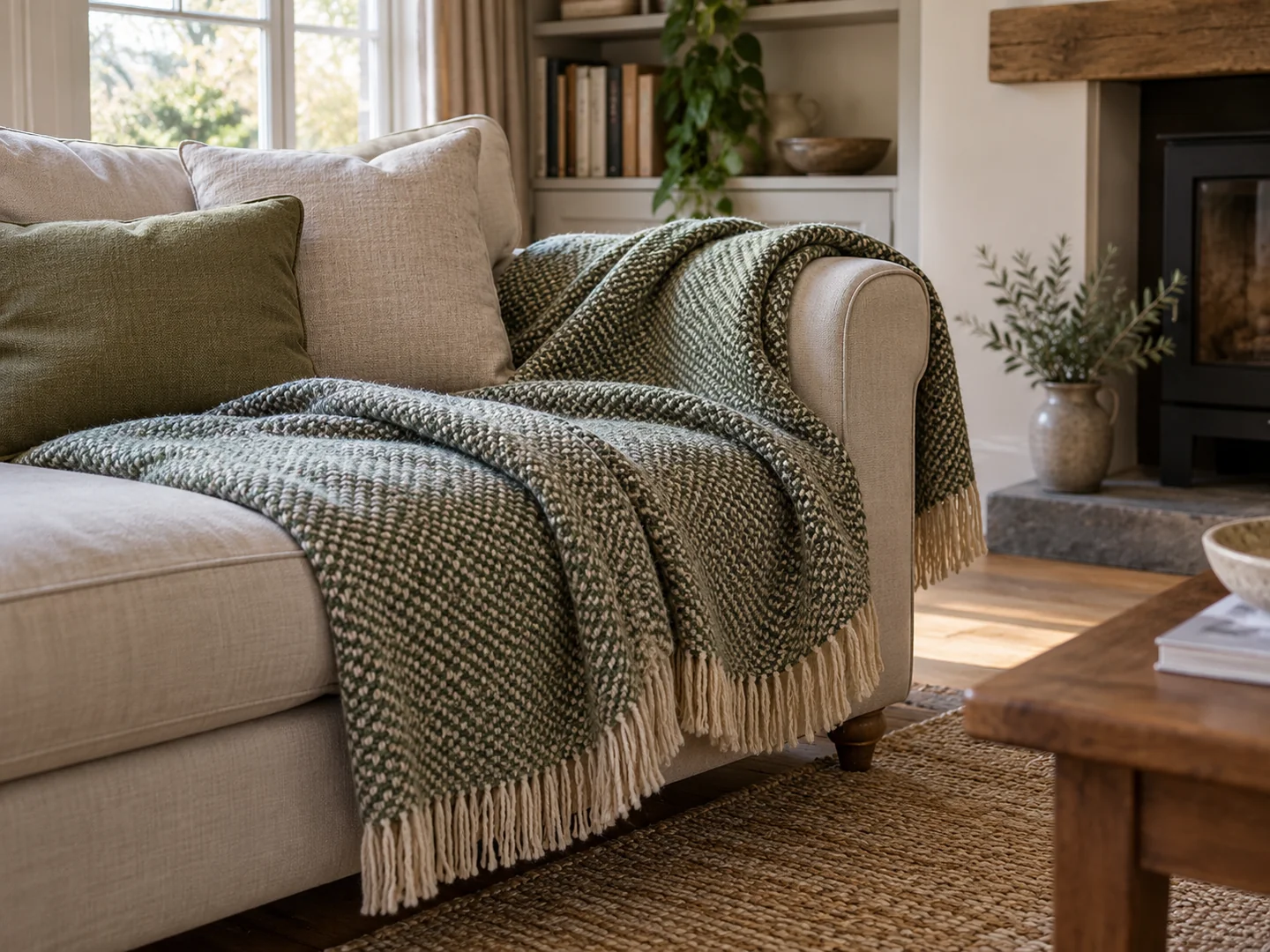
Choose colour beside the sofa at both full size and folded size. A strong pattern can become a small accent when put away and a dominant surface when spread out. You should like both versions.
Read the cleaning requirement
Follow the particular throw's care label, including drying instructions. Do not assume all wool, cotton or linen throws share one washing method. If it needs specialist cleaning, include that in the decision about everyday use.
A throw is most useful when it can be reached, unfolded and enjoyed without careful staging. Buy for the coverage and feel first, then let its texture and colour contribute to the room.